
From the sweeping glacier descents of the French Alps to the charming wooden chalets dotted across Austrian valleys, Europe offers an extraordinary diversity of skiing experiences. Choosing where to spend a week on snow can feel overwhelming when dozens of world-class resorts compete for your attention. Snow reliability, altitude, terrain variety, lift infrastructure and sheer scale all matter, and some destinations deliver more than others.
Les 3 Vallées and its flagship resorts, including Val Thorens, Méribel, Courchevel and Les Menuires, consistently sit at the very top of any serious ranking. With 600 km of interconnected pistes stretching across seven resorts, no other ski domain on the planet matches that scale. For the 2026/2027 season, picking the right resort and the right lift pass can transform a good holiday into an unforgettable one.
Why Les 3 Vallées Dominates European Skiing: The World’s Largest Ski Area
Les 3 Vallées connects seven resorts across three valleys: Courchevel, Méribel, Brides-les-Bains, Les Menuires, Saint-Martin-de-Belleville, Val Thorens and Orelle. Together, they form a 600 km ski domain served by 159 lifts, spanning elevations from 1,100 m all the way up to 3,230 m. No other European ski area comes close to this interconnected scale.
Grab the Official 3 Valleys lift pass (available from the sales office at 378 Avenue de Belleville, BP62, Moûtiers, France) and you unlock every single piste, from gentle nursery slopes perfect for beginners to steep couloirs that challenge even seasoned freeriders. Pass options range from 4-hour tasters to full-season passes, giving you total flexibility.
The terrain caters to every level. Families cruise wide groomers above Méribel, intermediates explore long descents between valleys, and advanced skiers hunt powder in Val Thorens’ high bowls. The 2026/2027 season runs from 5 December 2026 to 18 April 2027, offering over four months of reliable snow across this extraordinary domain.
Top 15 Best Ski Resorts in Europe: The Complete Ranking for 2026/2027
This ranking weighs six objective criteria: ski area size, altitude and snow reliability, lift system quality, terrain variety, resort character, and value for money. Les 3 Vallées resorts earn their places through measurable advantages that few competitors can match.
#1 to #5: The Elite Tier: Val Thorens, Courchevel, Méribel, Zermatt, and Verbier
1. Val Thorens (Les 3 Vallées, France) : Europe’s highest resort sits at 2,300 m, guaranteeing exceptional snow from opening day to closing weekend. Every run feeds into the full 600 km 3 Vallées network. The compact, ski-in/ski-out village means zero wasted time on transfers.
2. Courchevel (Les 3 Vallées, France): Four altitude villages (from 1,550 to 1,850 m) deliver world-class luxury alongside superbly groomed pistes. Michelin-starred restaurants line the streets, yet the skiing itself remains the real draw: wide, rolling runs that reward precise carving.
3. Méribel (Les 3 Vallées, France): Sitting at the geographic heart of the 3 Vallées, Méribel offers unbeatable access to every corner of the domain. The resort hosted the 1992 Olympic slalom events and blends excellent intermediate terrain with a warm, family-oriented atmosphere.
4. Zermatt (Switzerland): The iconic Matterhorn backdrop alone justifies a visit. Glacier skiing reaches 3,883 m, making Zermatt one of the few resorts offering year-round snow. A cross-border link to Cervinia in Italy adds international flair.
5. Verbier (Switzerland): Legendary among freeriders, Verbier delivers some of the Alps’ most thrilling off-piste descents. The broader 4 Vallées area covers 410 km. Après-ski here buzzes with energy after every last run.

#6 to #10: Outstanding All-Rounders: Les Menuires, Val d’Isère, St. Anton, Chamonix, and Kitzbühel
6. Les Menuires (Les 3 Vallées, France): Often overlooked, Les Menuires provides the best value gateway into the 3 Vallées. Strong family infrastructure, direct lift access to Val Thorens and lower accommodation prices make it a smart choice for budget-conscious skiers.
7. Val d’Isère (France): Linked with Tignes across the 300 km Espace Killy, Val d’Isère combines high-altitude reliability with legendary après-ski. Michelin-starred dining and a genuine mountain-town feel set it apart from purpose-built competitors.
8. St. Anton am Arlberg (Austria): Part of the vast Arlberg ski area, St. Anton draws powder hounds and party-goers in equal measure. Steep, ungroomed terrain above the tree line rewards adventurous skiers willing to hike for fresh tracks.
9. Chamonix-Mont-Blanc (France): The birthplace of alpinism offers the mythical Vallée Blanche, a 20 km descent from the Aiguille du Midi at 3,842 m. Chamonix suits experienced skiers more than beginners, but the raw mountain grandeur is unmatched.
10. Kitzbühel (Austria): A medieval town wrapped in Tyrolean charm, Kitzbühel hosts the legendary Streif Hahnenkamm downhill each January. Gentle intermediate slopes surround the town, and the romantic atmosphere draws couples and traditionalists alike.
#11 to #15: Hidden Gems and Iconic Classics: Cortina, La Plagne, Lech-Zürs, St. Moritz, and Les Gets
11. Cortina d’Ampezzo (Italy): The glamorous Dolomite setting gained fresh global attention after hosting events during the 2026 Winter Olympics. Excellent intermediate pistes and outstanding Italian gastronomy define the experience here.
12. La Plagne (France): Part of the Paradiski area (425 km linked with Les Arcs), La Plagne excels for families and beginners. Glacier skiing on the Grande Motte adds high-altitude options when lower slopes turn slushy.
13. Lech-Zürs (Austria): Exclusive, elegant and connected to the wider Arlberg network via the Flexenbahn gondola, Lech-Zürs attracts those seeking deep powder and refined luxury in equal doses.
14. St. Moritz (Switzerland): The birthplace of winter tourism radiates prestige. The sunny Engadin valley offers 350 km of slopes, and the town’s history stretches back to the first-ever winter tourist season in 1864.
15. Les Gets (France): A charming Savoyard village within the Portes du Soleil, Les Gets suits families perfectly — gentle, tree-lined runs, affordable dining and a welcoming community spirit round out this underrated gem.
 How to Choose the Right Official 3 Valleys Lift Pass for Your Holiday
 How to Choose the Right Official 3 Valleys Lift Pass for Your Holiday
The 3 Vallées pass system offers remarkable flexibility, and choosing the right option can save you serious money. Here’s a quick breakdown of the main categories:
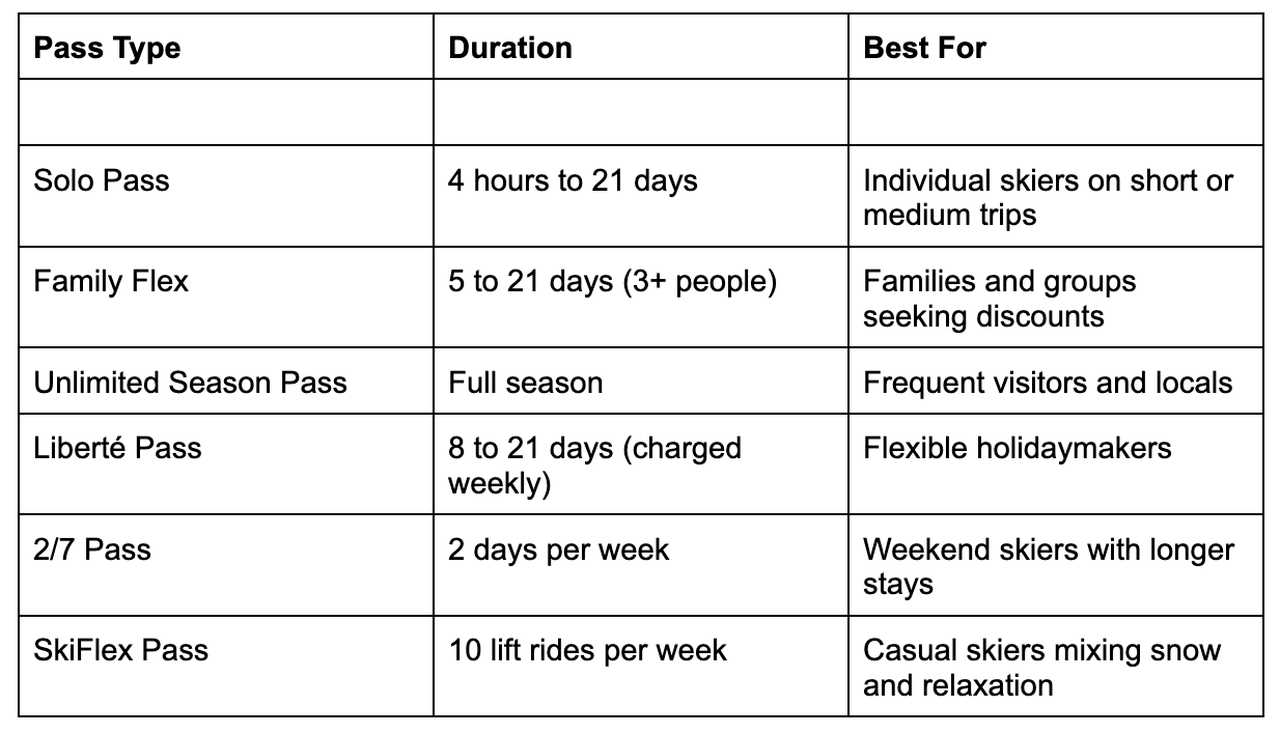
Prices start from just €55.40 for a solo half-day, which unlocks 600 km of terrain. Children under 5 ski free, a genuine bonus for young families. Buying your pass online before arrival lets you skip queues at the ticket office and often secures better rates than walk-up purchases.
European Ski Destinations?
One feature separates the 3 Vallées from every competitor: a fully interconnected ski-in/ski-out system linking all seven resorts without a single bus transfer. You clip into your bindings at your hotel door in Méribel and ski all the way to Val Thorens for lunch, then glide over to Courchevel for afternoon runs. No other domain offers this seamless experience at such scale.
The altitude range from 1,100 m to 3,230 m keeps snow conditions reliable from early December through mid-April. Compare that with the Portes du Soleil, where lower-altitude villages sometimes struggle in warm spells. The Espace Killy (300 km) and Paradiski (425 km) both impress, but neither matches the 3 Vallées’ 600 km of linked pistes.
Each resort within the domain brings a distinct personality. Courchevel delivers luxury. Les Menuires keeps costs low. Val Thorens guarantees snow. Saint-Martin-de-Belleville offers authentic Savoyard village charm. You pick the vibe, and the lift pass handles the rest.
Essential Tips for Planning a Ski Holiday in Europe’s Top Resorts
Book early if you’re targeting peak weeks like Christmas or February half-term, as popular resorts sell out months in advance. For better value, consider early December or late March when prices drop, and slopes stay quieter.
Major gateway airports serving the Alps include Geneva, Lyon, Chambéry and Innsbruck. Transfer times to most top resorts range from 90 minutes to three hours. Shared shuttle services and private transfers both run frequently during the season.
Ski insurance deserves your attention before departure. Policies similar to France’s Carré Neige cover mountain rescue (helicopter evacuation alone can cost thousands), lift pass reimbursement if injury cuts your trip short, and medical expenses. Multi-day passes consistently offer better per-day value than singles across every major resort, so plan your skiing days before you buy.
Frequently Asked Questions About Skiing in Europe
What is the largest ski area in Europe?
Les 3 Vallées in France holds that title with 600 km of interconnected pistes across seven resorts, including Val Thorens, Méribel and Courchevel. No other domain offers a comparable linked network.
How much does an Official 3 Valleys lift pass cost?
Solo passes start from €55.40 for a half-day. Weekly and season options bring the daily cost down significantly. Family Flex discounts apply for groups of three or more, and children under 5 ski completely free.
When is the best time to ski in Europe?
January to March typically delivers the most consistent snow across the Alps. High-altitude resorts like Val Thorens remain snow-sure from December right through to April, making them a safe bet for early and late-season trips.
3 comments
Courchevel includes 5 resorts not 4.
Please check your facts. Dolomiti Superski features 1250km of slopes, approx 900 of them directly connected with each other.
Thanks for sending everyone to the crowded tourist spots and leaving the skiers mountains alone.