
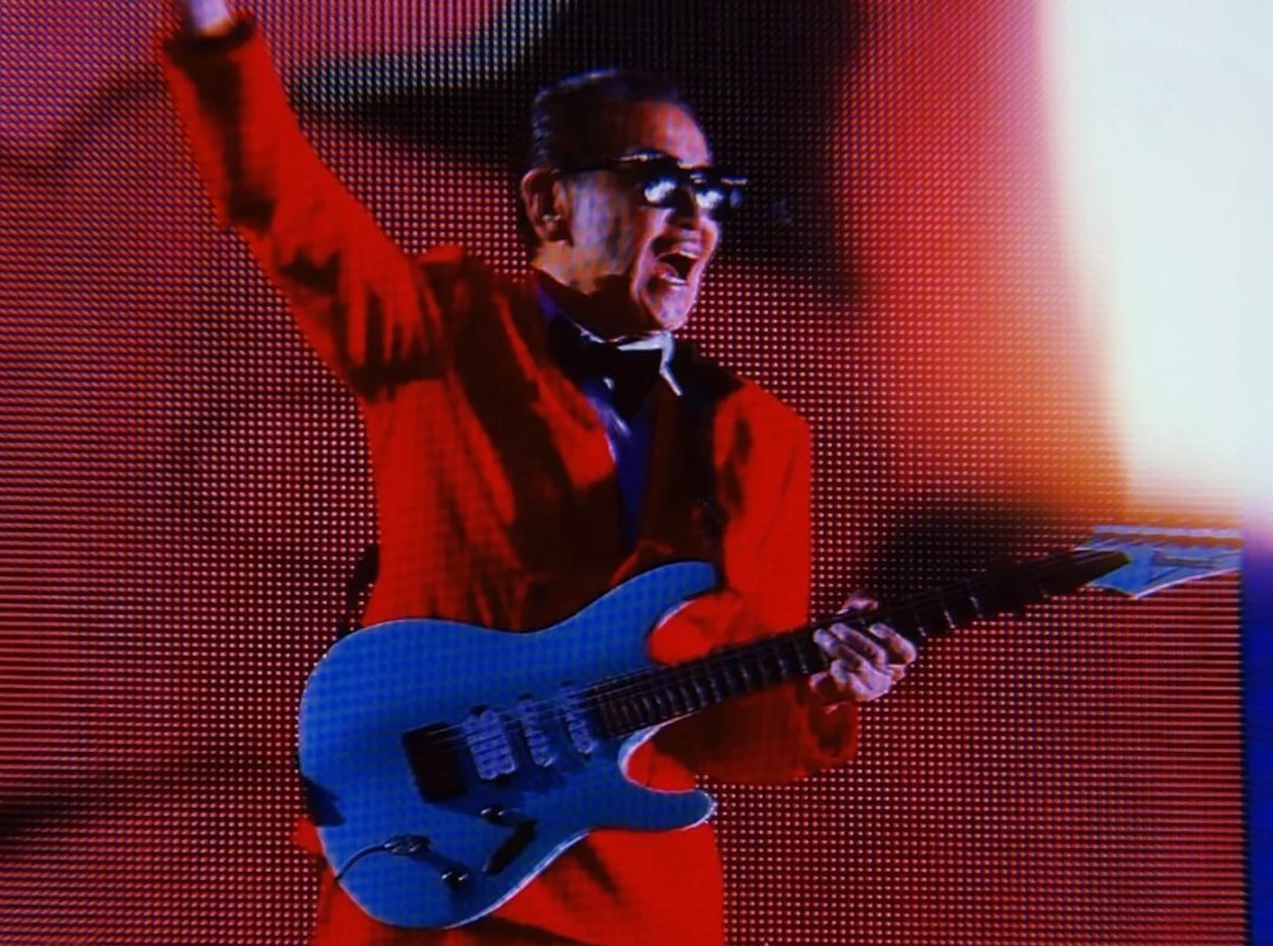
Masayoshi Takanaka played Crystal Palace Bowl as part of the City Pop Waves festival on August 7th 2026
What is postmodernism in the internet age? Maybe it’s a 73-year-old Japanese guitar virtuoso walking onto a stage in south London to the sound of 10,000 people in their twenties cheering as if he were the pop star they’d been waiting their whole lives to see, even though most of them probably hadn’t heard of him a year ago. Stranger still, half of them are dressed like him.
This is Masayoshi Takanaka’s strange second life in Britain. He has been a major figure in Japan since the 1970s, but until recently was almost completely unknown here. His music – breezy, tropical, jazz-fusion guitar, somewhere between a freeway in a futuristic city and a Yokohama beach holiday – has been sucked into the Western city-pop revival, and then into TikTok, where a new generation has discovered it without any of the cultural baggage of having actually lived through the era in which it was made. His first solo UK shows were only this spring. Now, a few months later, he is headlining a 10,000-plus-capacity outdoor festival. That’s algorithm speed, folks.
The crowd at Crystal Palace Bowl makes the mechanism behind this revival impossible to miss. There are almost no Japanese people and almost no old people. Instead there are Gen Z fans in Hawaiian shirts, red suits and papaya-themed accessories, treating Takanaka less like a veteran musician on a comeback tour than like a meme that has somehow come to life.
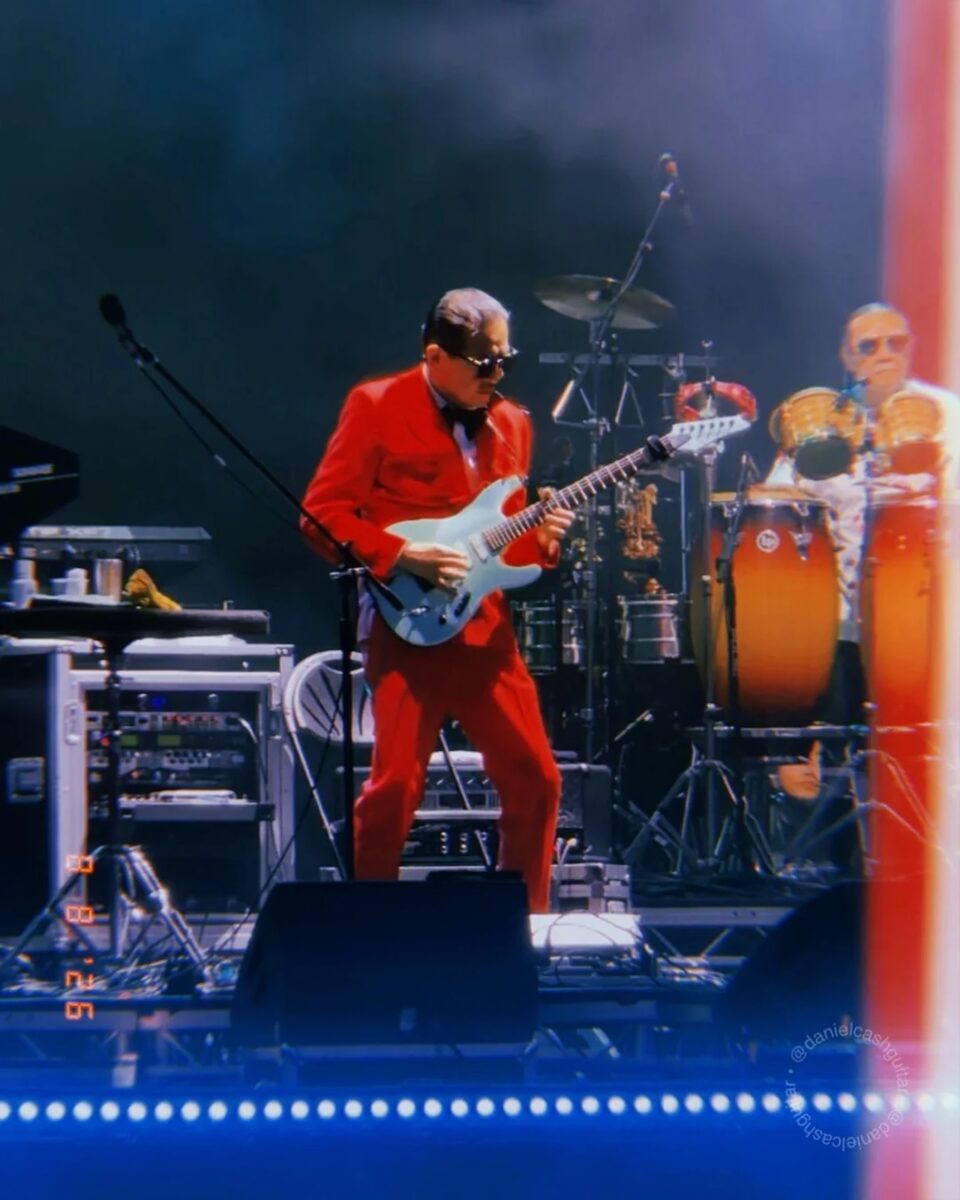
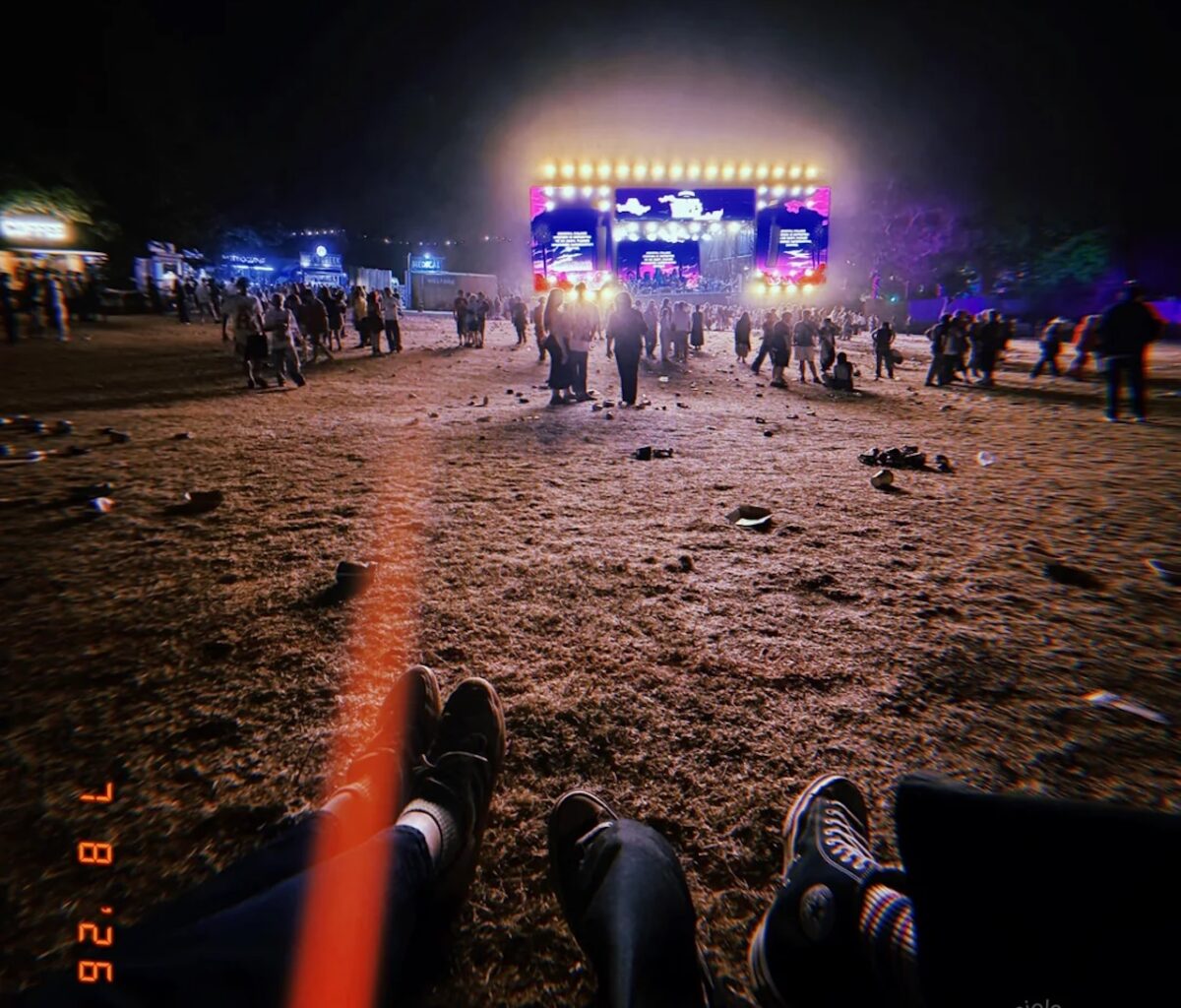
The venue itself adds to the idiosyncrasies of the evening. Crystal Palace Bowl is one of London’s more understated historic concert sites: a natural amphitheatre looking down towards a rather mulchy pond (rather than the grand Hollywood Bowl its name initially suggests). In the 1970s, audiences famously swam across the water to get closer to the stage. Pink Floyd played here; Elton John played here; Bob Marley gave his final London concert here in 1980. Today the old stage has been converted into a pond-side VIP area, and a new stage sits at an awkward right angle to the pond. Despite looking like a badly balanced haircut at first glance, the reality is that it works – there are few bad views, even when thousands of people are packed into the bowl, and it feels far more intimate than the numbers suggest.
Before Takanaka, Junko Yagami, whose 1983 hit “Bay City” is another city-pop touchstone, delivers half an hour of immaculate 80s Japanese pop, including her new song “TERRA”, which she likes enough to reprise at the end of her set before the sun disappears.
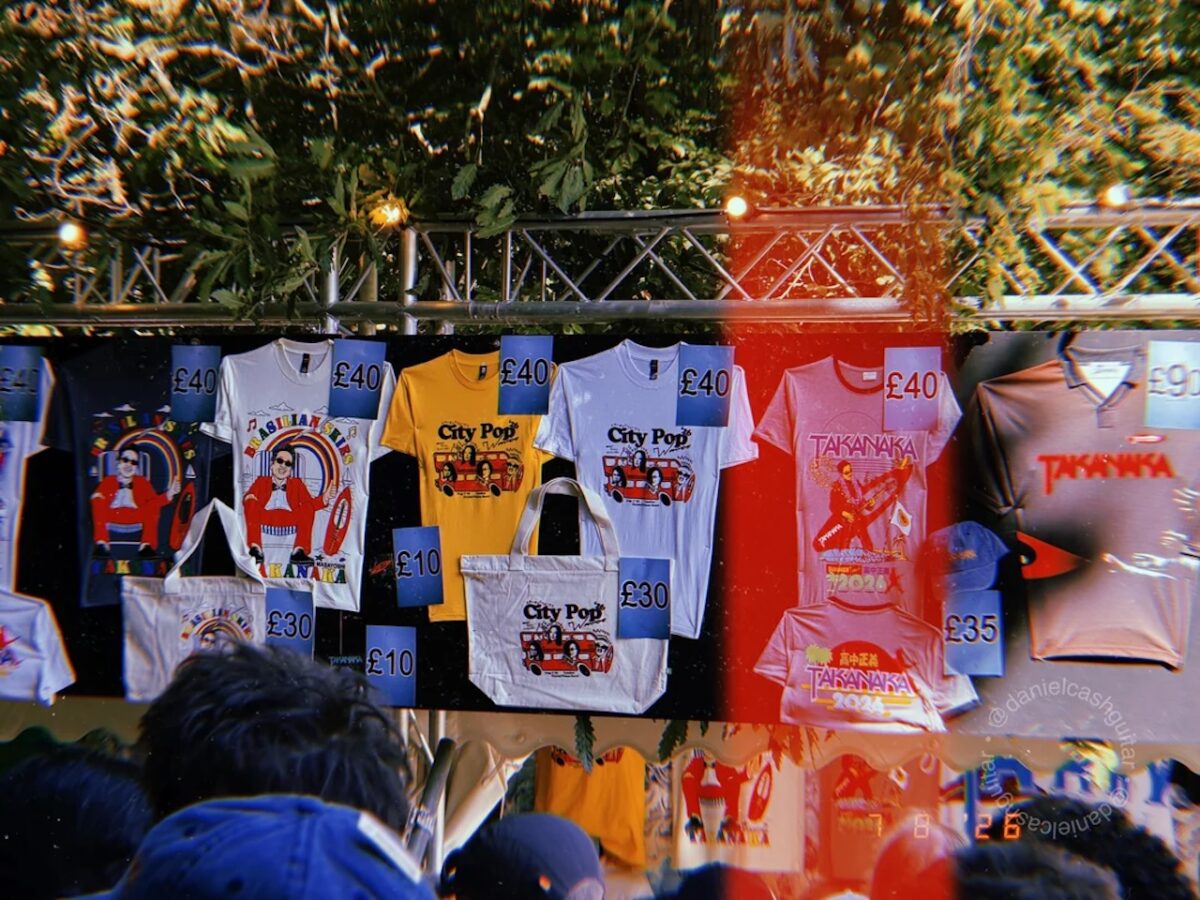 Then Takanaka appears in his red suit and opens with ‘Brasilian Skies’, one of the songs that the algorithm has turned into a favourite. This papaya fruit-themed ditty is celebrated by Takanaka holding up – wait for it – some cut-outs of papaya! Immediately around you, you notice the papaya hair clips, the papaya shirts, the little visual references scattered through the crowd. We are all playing the same game.
What follows is two hours of what could best be described as wibbly-wobbly vibey noodling. There aren’t many highs or lows. Just Takanaka and his band moving through catchy, bossa-nova-infused melodies and immaculate guitar solos with the same easy-breezy optimism that runs through so much city pop.
And oddly, the biggest reactions often come not from the music but from Takanaka himself. He forgets to introduce members of his band – “my brain is too old,” he explains – and at one point simply sits down for an entire song, disappears almost entirely from the mix and waves at the crowd while everyone else in the band gets on with it. He makes frequent use of the far corners of the stage, getting in his daily steps as he trots to the far end, as he does during ‘The Party’s Just Begun’, to let a few more fans get a closer view of him.
Without the red suit and guitar, you could mistake him for one of those friendly, enthusiastic OAPs employed to guide traffic in and out of underused municipal car parks across Japan. If you’ve ever been to Tokyo, you’ll know the ones I’m talking about.
Photos by Daniel Cash @iamdanielcash
But that is part of the charm. This isn’t the great return of a musician whose aura has been steadily building in Britain for 50 years. It is something much stranger: an internet audience discovering an old musician as if he were new. Nobody here remembers Takanaka being famous. They have simply found him. That he might seem a little bewildered is understandable.
Whether this is the beginning of a lasting second wave for city pop, or just another strange summer obsession produced by the algorithm, is impossible to know. But watching 10,000 young Londoners dress up for a guitarist in his seventies, doot-dooting along to music made before most of them were born, feels like a pretty good demonstration of how completely the way we find music has changed.
Photos by Daniel Cash @iamdanielcash