
A small crowd stood ahead of me. Was this a museum? A theatre? Whatever it was, it clearly counted as a Budapest attraction. Above me, a domed glass ceiling gazed down, throwing light and shadow across an elegant passageway where guests sat sipping beverages and dining, cocooned inside this enchanting historical space. Throughout the day here, stained-glass panels perform an ever-changing, almost cinematic play of light, animating an ornamented labyrinth of facades, coves and arches. It felt fairy-tale and palatial, as though I had stepped back into the golden age of early-20th-century Budapest, inside a jewel box of twinkling light, intricate ceramics and sculptural detail.
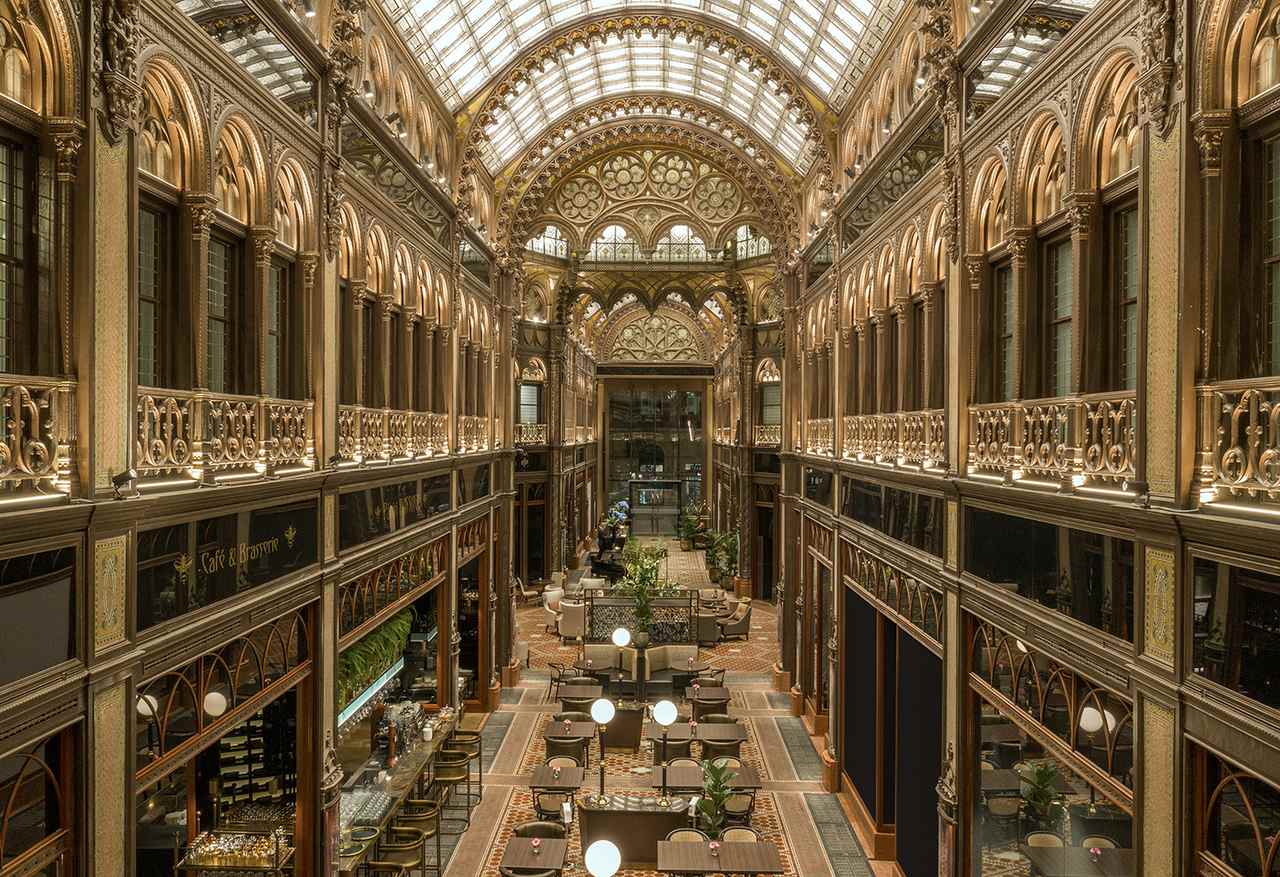
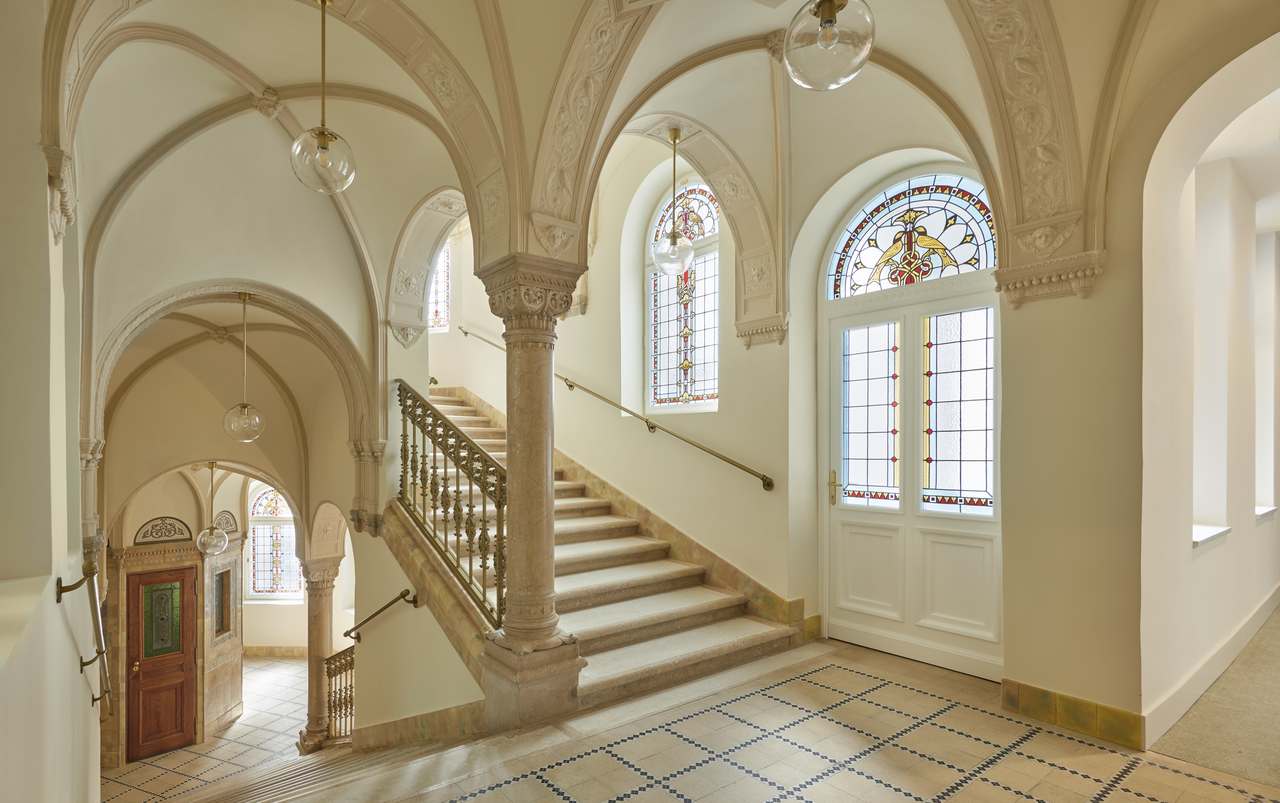
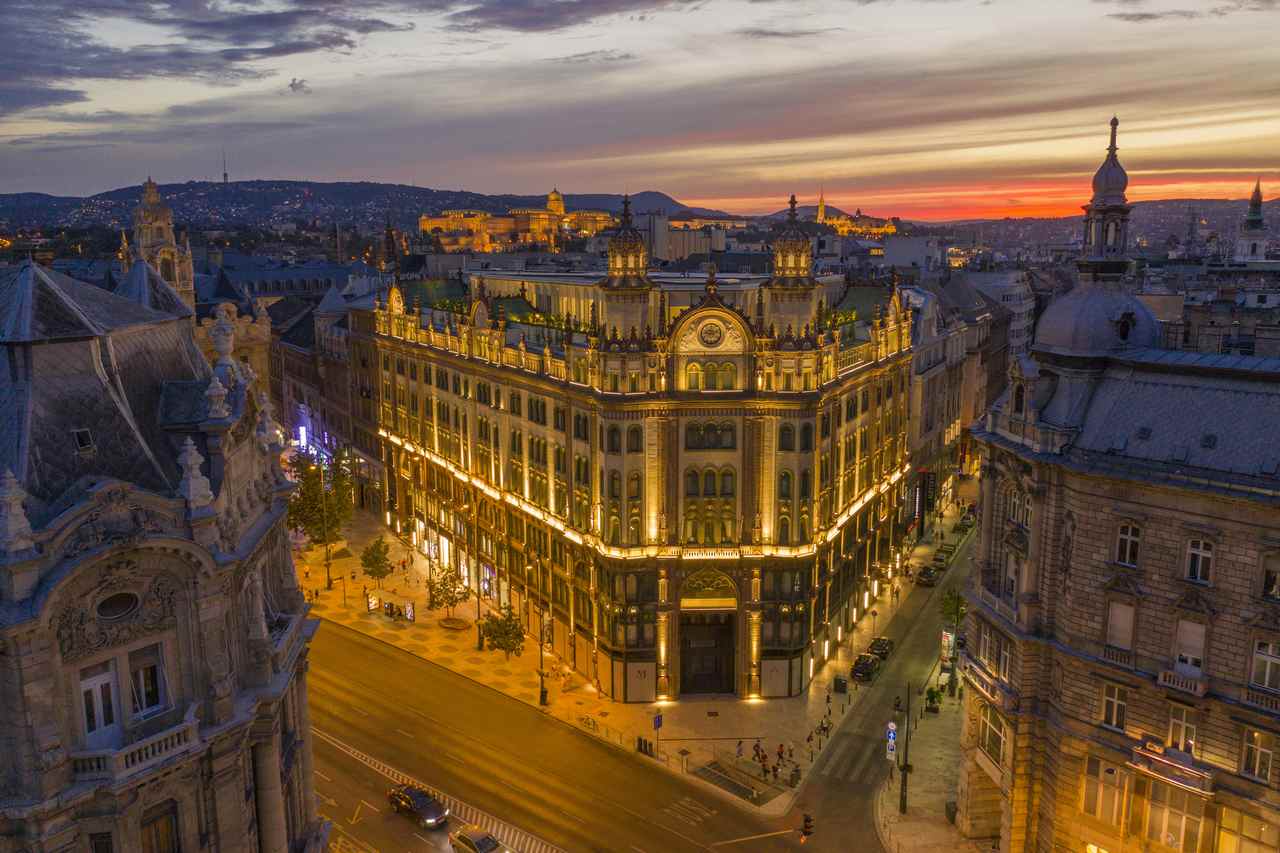
This was my first impression of the Párisi Udvar Hotel, where I was staying for two nights. The building’s history is not something you read about later, it announces itself the moment the heavy entrance doors open.
The story begins in 1817, when the original structure was designed by Mihály Pollack, architect of the Hungarian National Museum, and owned by Baron József Brudern. Situated in what was then one of the city’s wealthiest districts, it was inspired by Paris’s Passage des Panoramas and became one of Budapest’s earliest modern shopping arcades. Thirty-two luxury shops once lined the passageway, selling handmade belts, dresses and hats to a fashionable clientele. At the turn of the 20th century, the building took on a new role as the headquarters of Budapest’s Central Savings Bank, rebuilt in a grand Beaux-Arts style. Its fortunes changed dramatically during the Second World War, when it was badly damaged during the German occupation. For decades, the building stood as a faded echo of its former self.
Its revival began in 2014, when an ambitious restoration project transformed Párisi Udvar into a hotel, a process that took five years. carefully preserving its original structures, motifs and richly detailed facades. The result reclaimed Budapest’s golden age. Gothic, Moorish and Arabic influences coexist throughout the interiors, creating a richly layered aesthetic that feels theatrical and grounded in history. Among the highlights are the hotel’s first elevators and the Polygon Court, once opening onto apartments for local residents and now reimagined as the hotel’s executive lounge. With full heritage protection, Párisi Udvar is a place where Budapest’s past is not a museum but experienced, daily, in light and conversation.
All 110 spacious guest rooms, which include 20 suites, are elegant and chic, oozing quality with 300-thread count bedding and a pillow menu – pure bliss, and airy marble bathrooms. For additional relaxation, the cosy Zafír Spa offers Finnish and infrared saunas, relaxation areas, and a wellness pool. The Presidential Suites on the sixth floor are the largest in Budapest, complete with breath-taking views over the rooftops from the terrace and a hammam, all of which have been enjoyed by the likes of Jennifer Lopez.

Párisi Passage Restaurant and Étoile Cocktail and Champagne Bar
The Párisi Passage Restaurant and Étoile Cocktail and Champagne Bar serve Hungarian cuisine and signature cocktails reflecting the connection to its heritage. Expect traditional dishes using locally sourced products with a modern twist, such as Wiener Schnitzel with Truffle Mashed Potatoes and for cocktails, there’s the Baron’s Favourite, made with White Pepper–Wheat Beer Cordial, Citrus, Hennessy VSOP, Egg White or a Parisian Affair, created with Coconut Milk, Lavender, Pear, Vanilla, and a pinch of Sea Salt.
Some hotels play a key role in capturing and showcasing art, heritage and tradition in today’s cultural world and sharing it with their guests. This five-star luxury Párisi Udav Hotel in Budapest is a member of the Unbound Collection by Hyatt and certainly portrays the unique stories and experiences of this building. It is no wonder that small culturally hungry tourist groups make a stop here to capture a piece of history and unique architecture in its full glory to take home in memory of Budapest’s Golden Age. I am fortunate to spend two nights experiencing it.
The City of Budapest
The city is split into two by the River Danube, Pest on one side and Buda on the other. Together, Budapest’s sights are plentiful:
The Hungarian Parliament
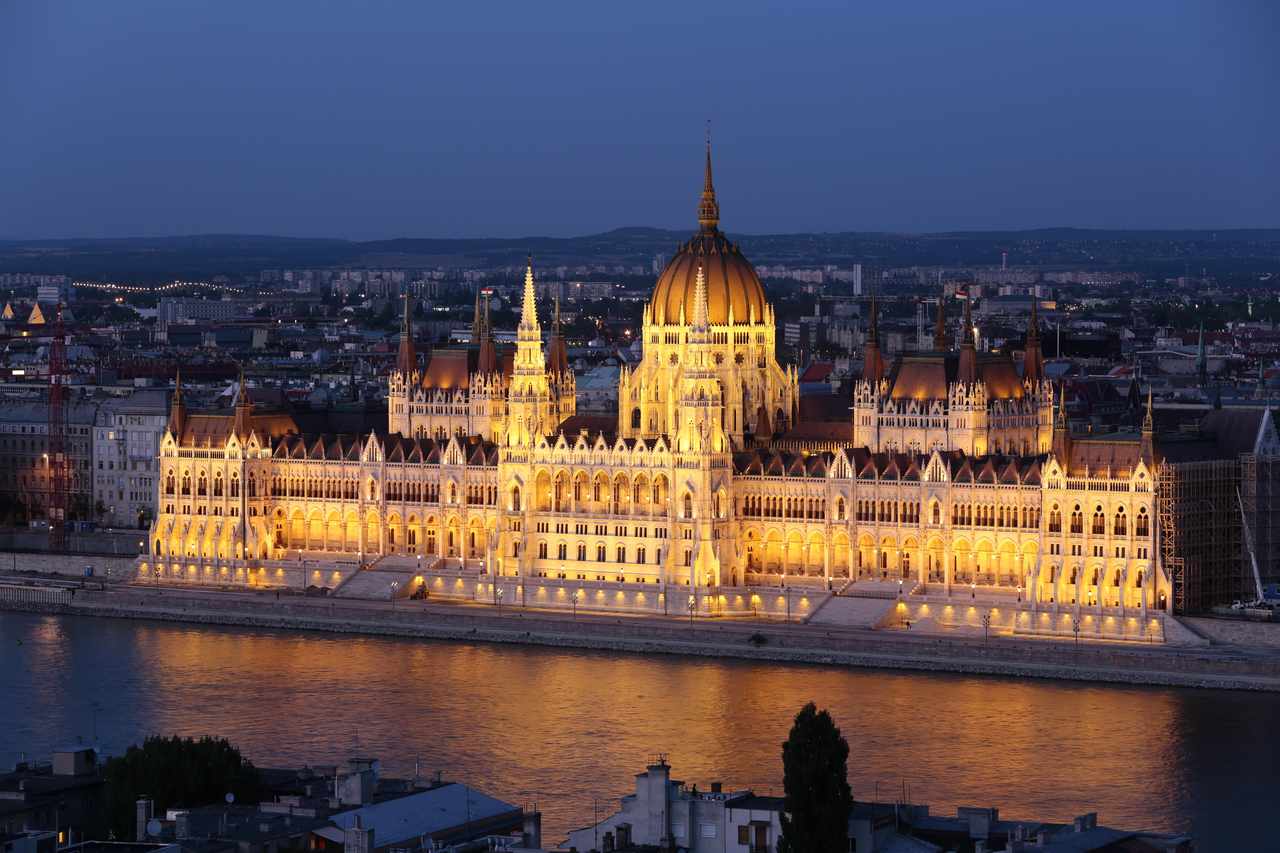 This impressive building is a symbol of the Hungarian capital, sitting on the bank of the Danube River. It is the third-largest parliament building in the world. One of the ways to enjoy this building illuminated at night is aboard one of the riverboat tours.
Great Market Hall
The city’s Neo-Gothic style central market hall is filled with 100 stalls selling cultural artefacts and traditional delicacies including local wines.
St Stephen’s Basilica
The Basilica is named after King Stephen, the first king of Hungary. This Neo-Classical church has magnificent interiors and intricately detailed paintings.
Dohány Street Synagogue
Located on Dohány Street it is the largest synagogue in Europe and the second largest in the world. The Oriental and Moorish designed temple seats 3000 people and is a centre of Neolog Judaism.
Széchenyi Baths
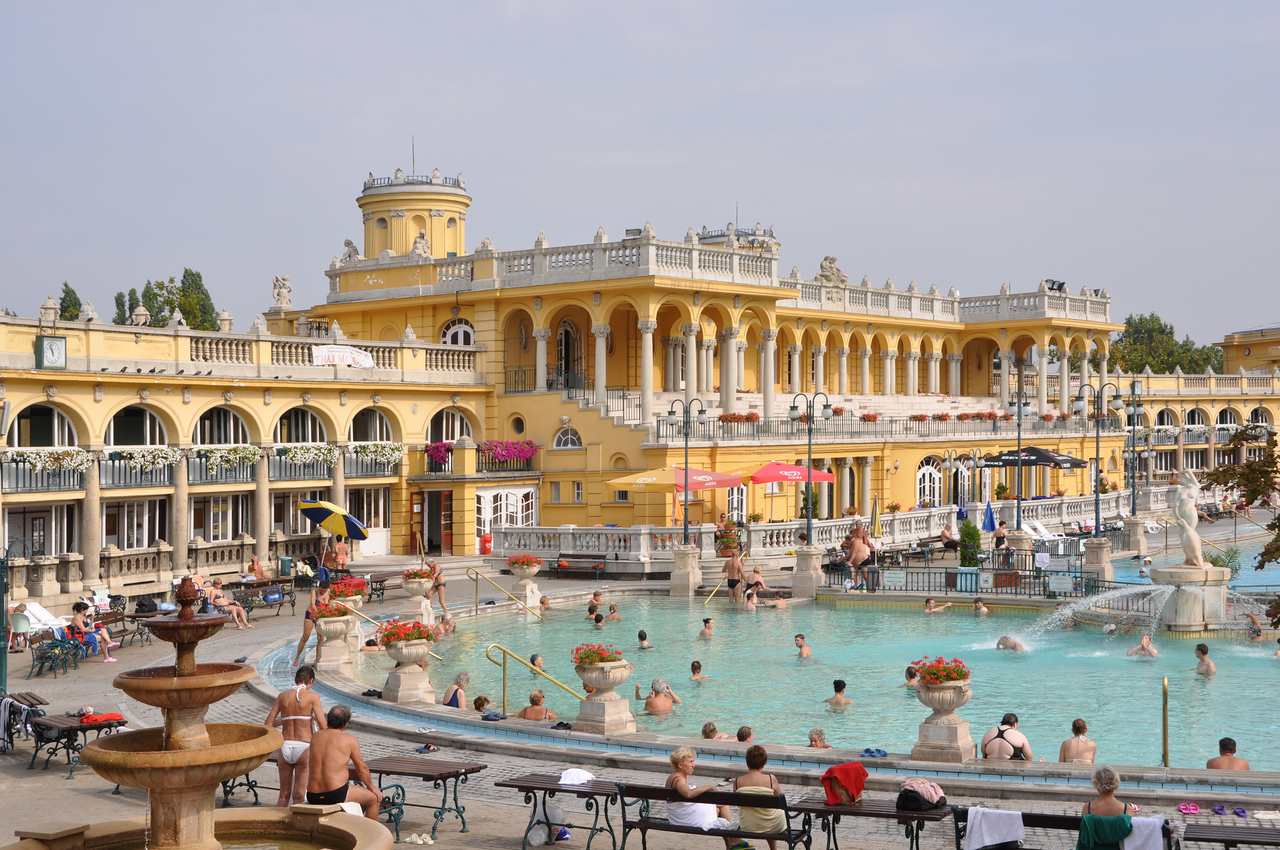
Budapest SzÇchenyi Baths
Budapest is renowned for its geothermal waters and is one of the largest thermal baths in Europe. Széchenyi Baths is located in City Park, offering three outdoor pools, 10 indoor plunge pools with steams and saunas.
Gellert Baths
This is known as the Palace of Baths and is Budapest’s most famous Art-Nouveau thermal bath housing 10 pools. The spa here is a destination in itself to relax in geothermal healing waters.
The Castle District
This is on the Buda side. Take the funicular ride to Castle Hill to reach the Buda Castle. This is also the location for Fisherman’s Bastion, a Neo-Romanesque lookout tower.
The Madách Theatre
A 20-minute walk from the hotel, built 86 years ago, the Madách Theatre (Madách Színház) is one of Hungary’s premier venues for musicals and stage productions such as Les Misérables.
Cinema Mystica, Budapest
This extraordinary experience sits next to the hotel. Be prepared for light, sounds, art and magic. Vibrant and spiritual, it’s a sensory journey through various media installations where you physically and emotionally step into the art.
Jane Wilson is a freelance travel and wellness write and editor of The Wellness Traveller. She was a guest of Párisi Udvar Hotel