
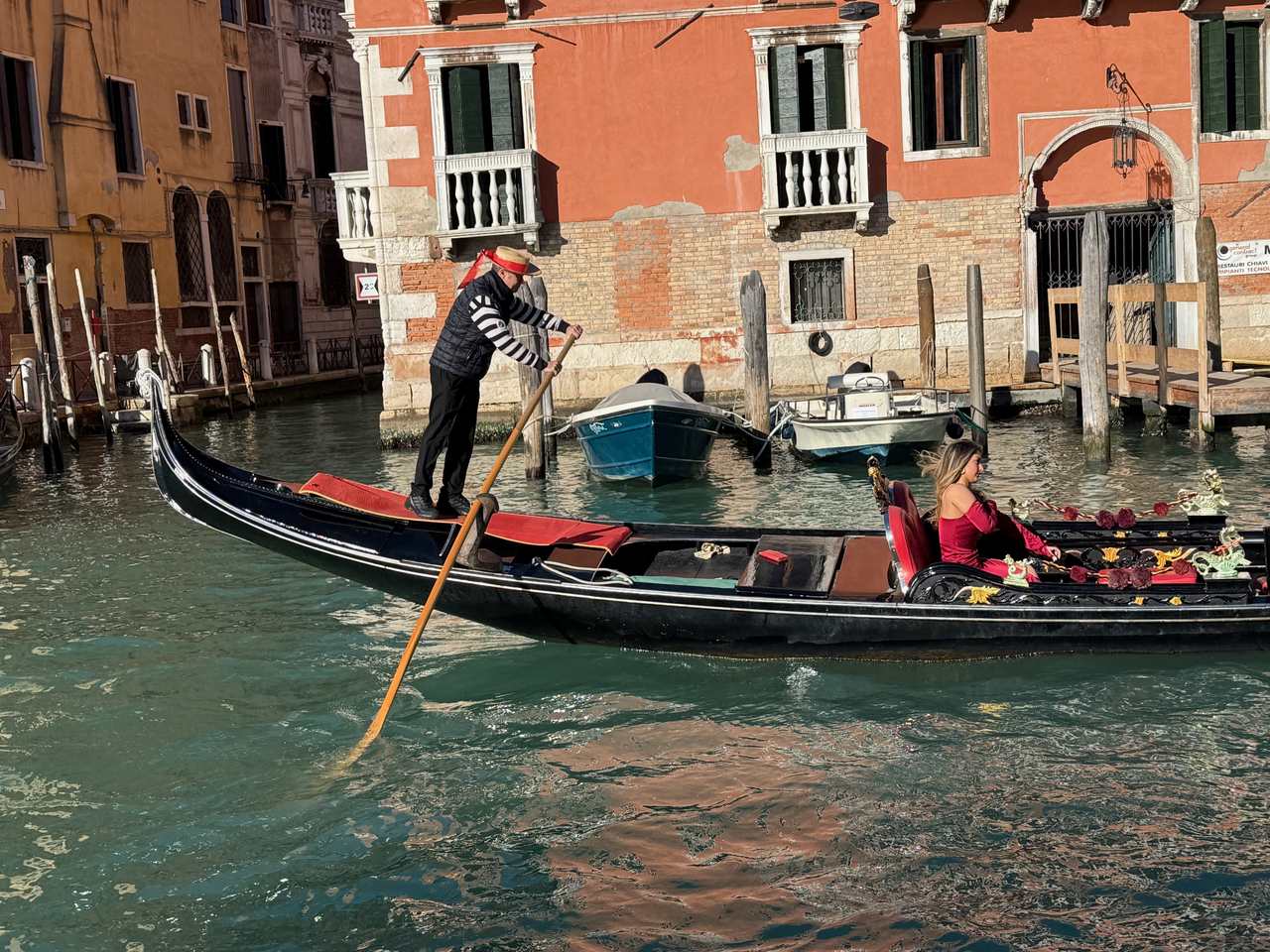
The gondola is a masterpiece of craftsmanship: 280 pieces of wood, from eight types of timber (oak, fir, cherry, larch, walnut, lime, elm and mahogany) and a minimum of seven layers of paint. Over time, this sleek black symbol has been perfectly designed for negotiating the meandering Venetian waterways.
During their heyday, from the 16th to 18th centuries, gondolas numbered around 10,000 and were the main means of transport. Today, there are only 430 fully licensed vessels, used almost exclusively for the tourist trade. Invariably, the number of gondola boatyards has also plummeted, with only two still using traditional techniques and each of them producing just one new gondola a year.
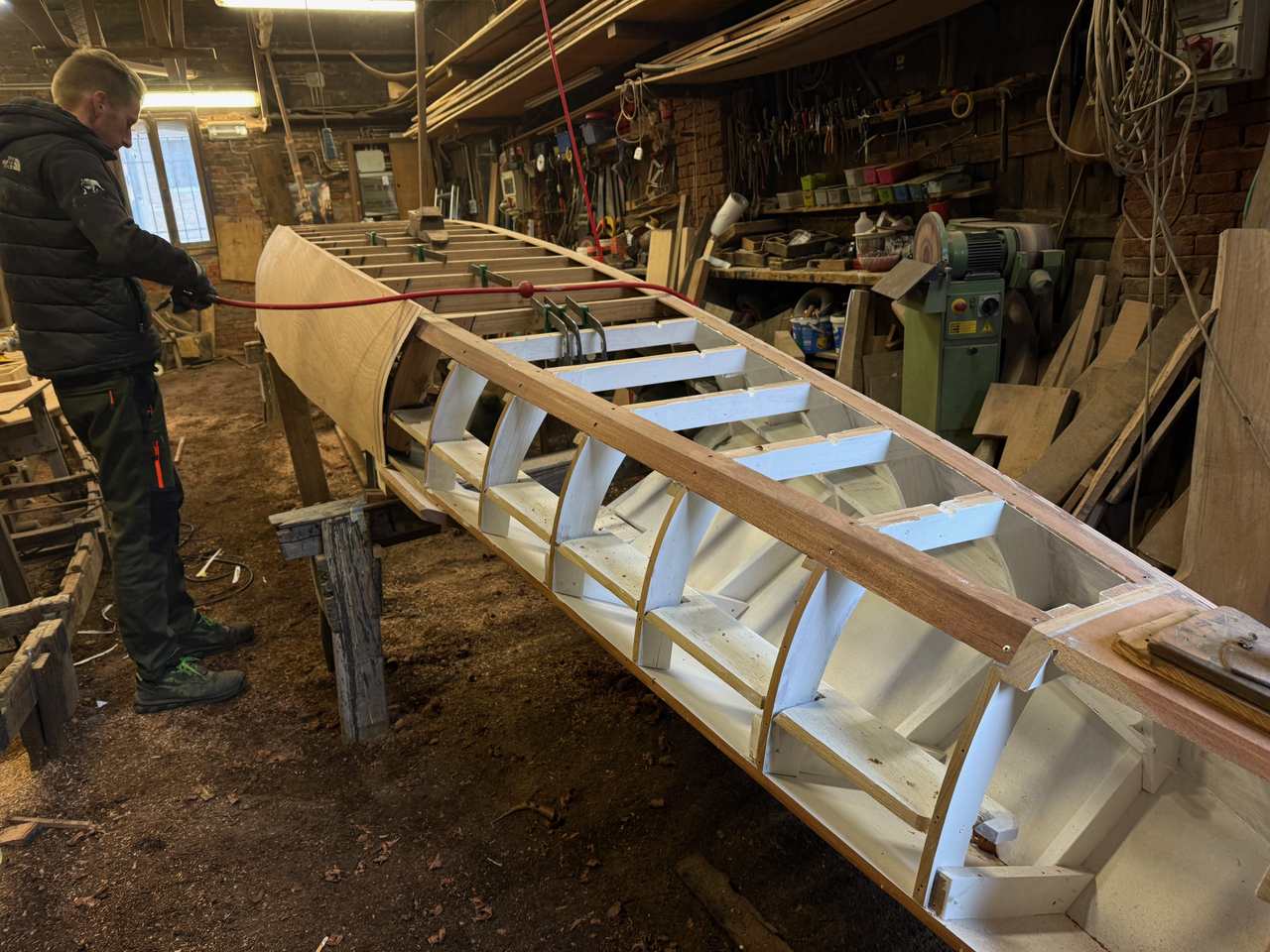
Inside the workshop
To find out how the gondolas are created and maintained, I am visiting the Squero (gondola boatyard) of San Trovaso in a quiet and pretty neighbourhood of south of San Marco. This historic workshop, which you can see from across the canal, looks a bit like a rustic Alpine farmhouse, its dark timbers set against the dazzling white Church of San Trovaso. The early craftsmen came from the mountainous Cadore region in the Dolomites, bringing with them woodworking and carpentry skills and creating boatyards in the style of their homeland.
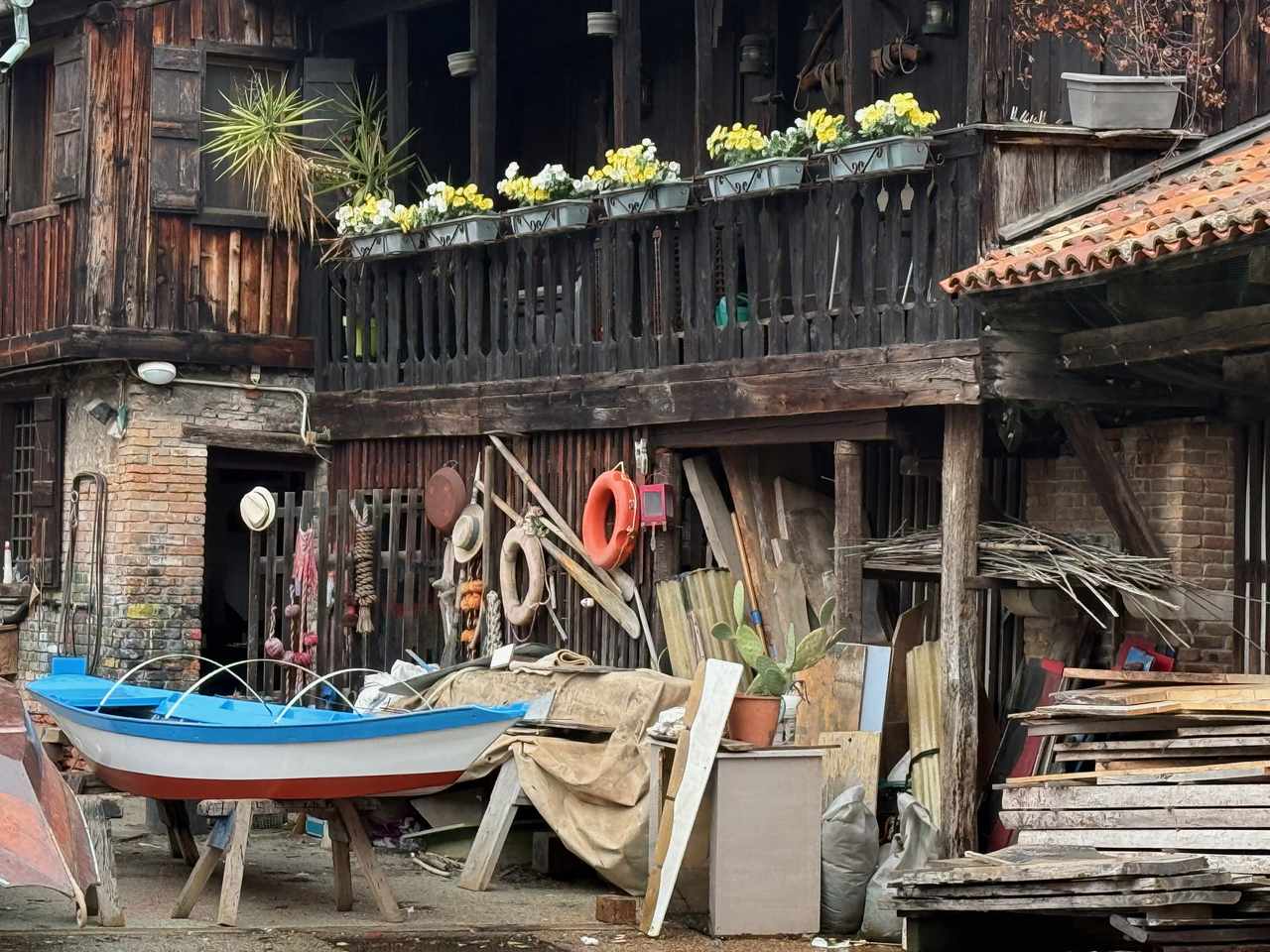
For years, the boatyard has been closed to visitors, and this is the first time I have been able to step inside and see, close-up, the centuries-old traditions of crafting gondolas.
I met Francesca, the workshop administrator and daughter of Maestro Lorenzo Della Toffa, the master boatbuilder. Her brother, Alberto, is an apprentice here, being taught the ancient skills by his father. Lorenzo has always been passionate about boats, and as a small boy was building them in his garden.
Francesca explains how traditions of gondola-making and repairing have been passed down from father to son for generations. Today, there are only a handful of gondola maestri (master craftsmen) in Venice, and for the Della Toffa family, the continuation of traditional techniques is paramount. While most other boatyards turn to cheaper marine plywood, which is easier for construction and requires less maintenance, at San Trovaso, they use hardwood only – and it’s all done by hand.
The craftsmen work with precision and dedication as they measure up, saw and shape the wood, hammer nails and apply the layers of paint. One gondola takes 2-3 months of daily work. If overhauled twice a year and brought in for a new hull every 20 years, a gondola should last 40 or 50 years.
Francesca points out the eccentric banana or asymmetrical shape of the hull. This counterbalances the one-sided Venetian rowing technique, enabling the vessel to maintain a straight course with minimal correction. Without the asymmetry, the boat would go round in circles. This breakthrough in the evolution of the vessel meant that a gondola required only one rower instead of two. The inventor was Domenico Tramontin, founder of the Squero Tramontin, which, like that of San Trovaso, is rooted in tradition.
The cost of a new gondola is around €45,000, but can be as much as €100,000 dependent on features and ornamentation required by the gondolier. This might be a sumptuous gold leaf pattern, a pair of lively hippocampi (mythological sea horses) or fancy upholstered seats and cushions.
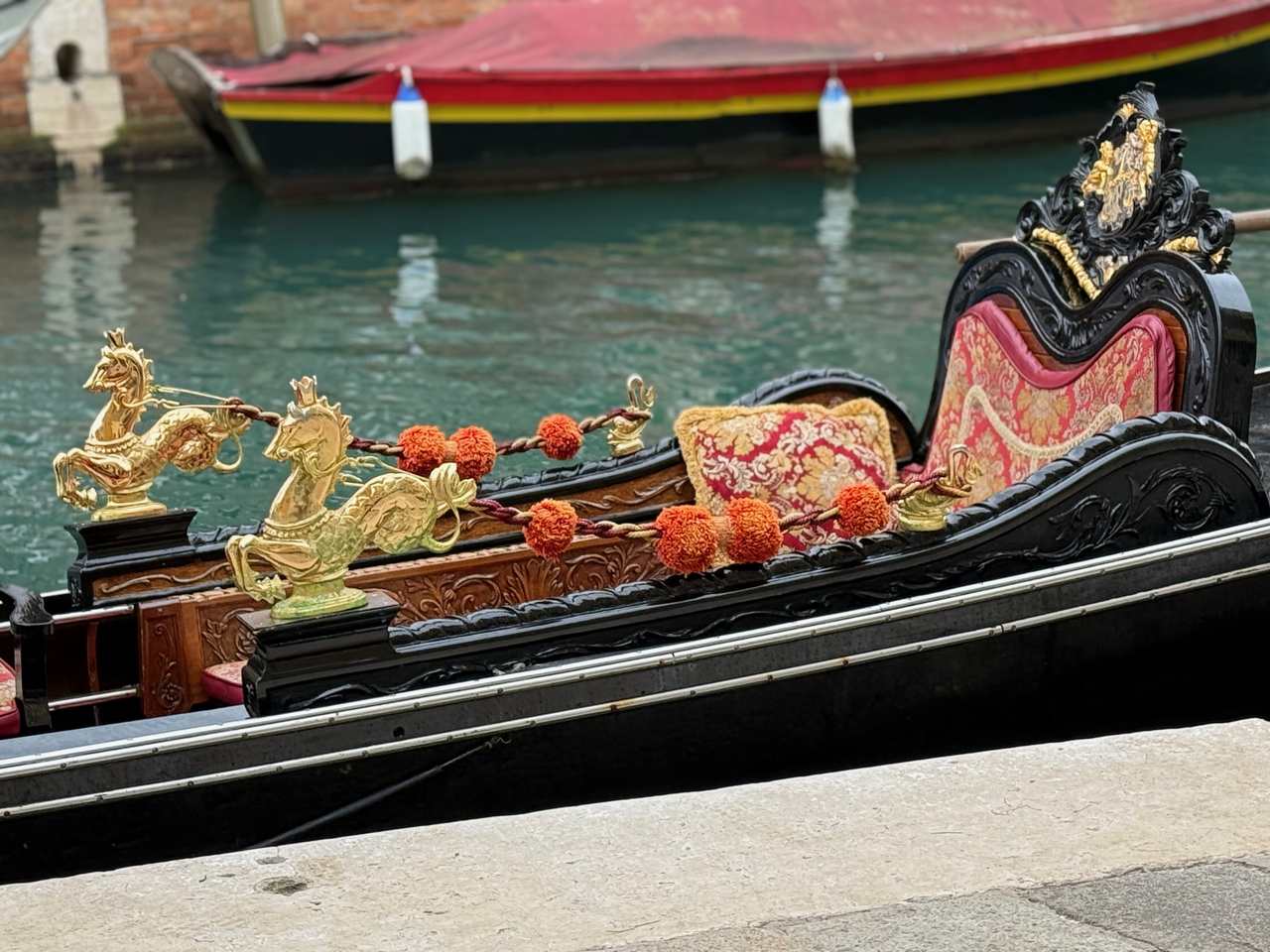
Gilded hippocampi, sculpted woodwork and plush uphostery
Each gondola has a metal ferro, at the bow, which may symbolise the six sestieri (districts) of Venice, beneath a doge’s cap, and on the side a carved wooden fórcola (rowlock) for steering. All this extra work is done by other artisans in the city, rather than at the squero.
A ten-minute stroll from the squero brings me to the fórcola (rowlock) workshop of Saverio Pastor (www.forcole.com), close to the Guggenheim Collection. In 1975 Saverio started working as an apprentice for two of the last great fórcola masters, then worked as an oar-maker before opening his present workshop in 2001. Here you can watch the team at work creating oars and a remarkable variety of rowlocks. It might be a dying art but these beautifully crafted features have become popular as decorative sculptures for the home. Costs range from €200-€2000.
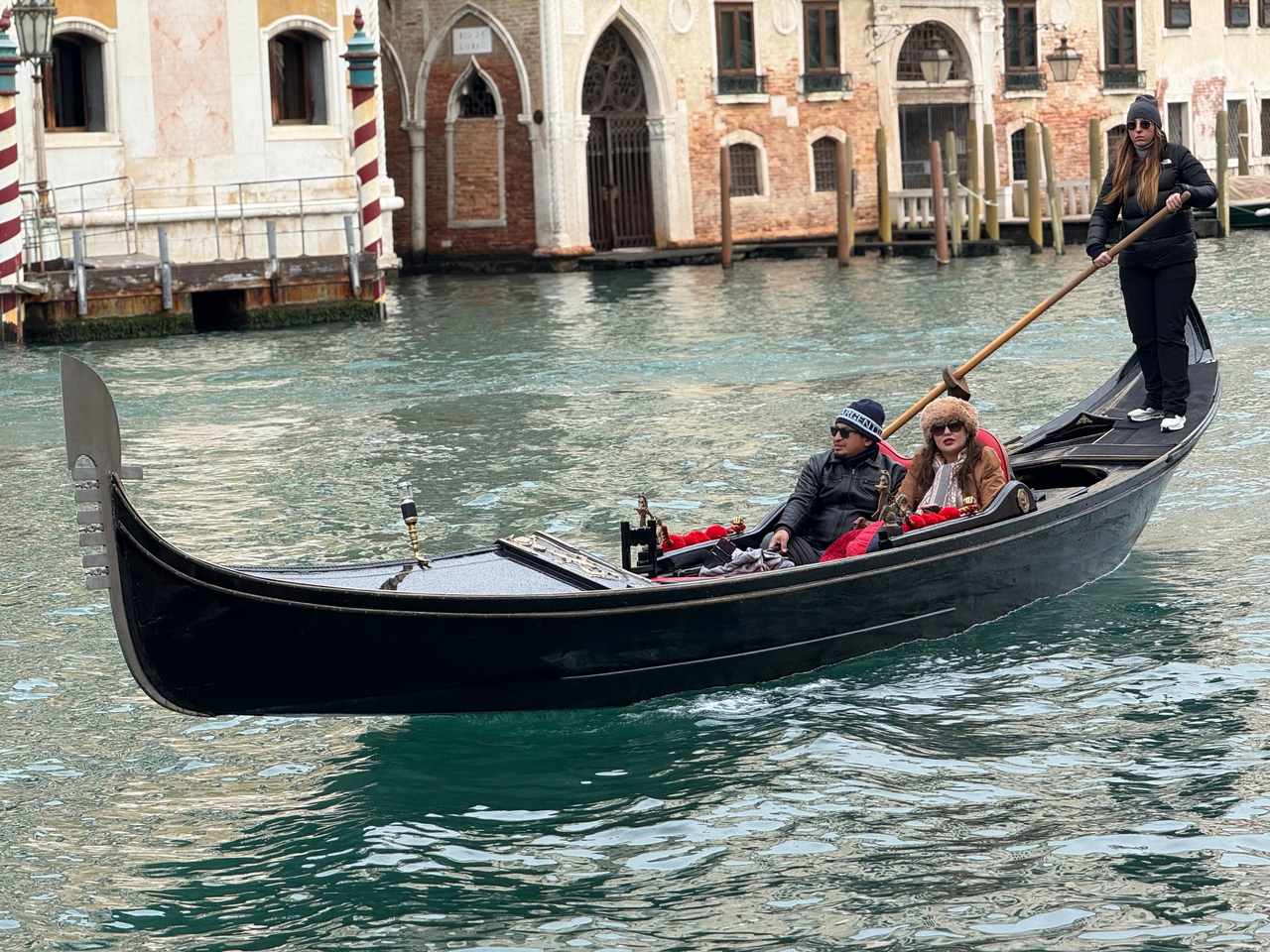
One of 15 female gondoliers
For centuries, the gondoliering profession was exclusively the preserve of males. But in 2010 Giorgia Boscolo, the 24-year-old daughter of a Venetian gondolier, broke tradition by becoming the first female gondoliera (female gondolier) to be granted a full license. Now there are 15. Until the 1980s, gondoliers had to be Venetian, but today anyone from the EU can apply, provided they are over 18, have a high school education, are healthy, can swim and succeed in completing rigorous training and exams on navigation, history, art and languages.
Few tourists discover the traghetti, the larger, two-man gondola ferries that cross the Grand Canal at a handful of points, providing a fast service for locals – and a cheap gondola ride for tourists. You just hand the gondolier a couple of euros, board the boat and stand (like the Venetians) or sit (like the tourists) for the brief crossing. This gondolier has been ferrying people across for 45 years – in the same boat.
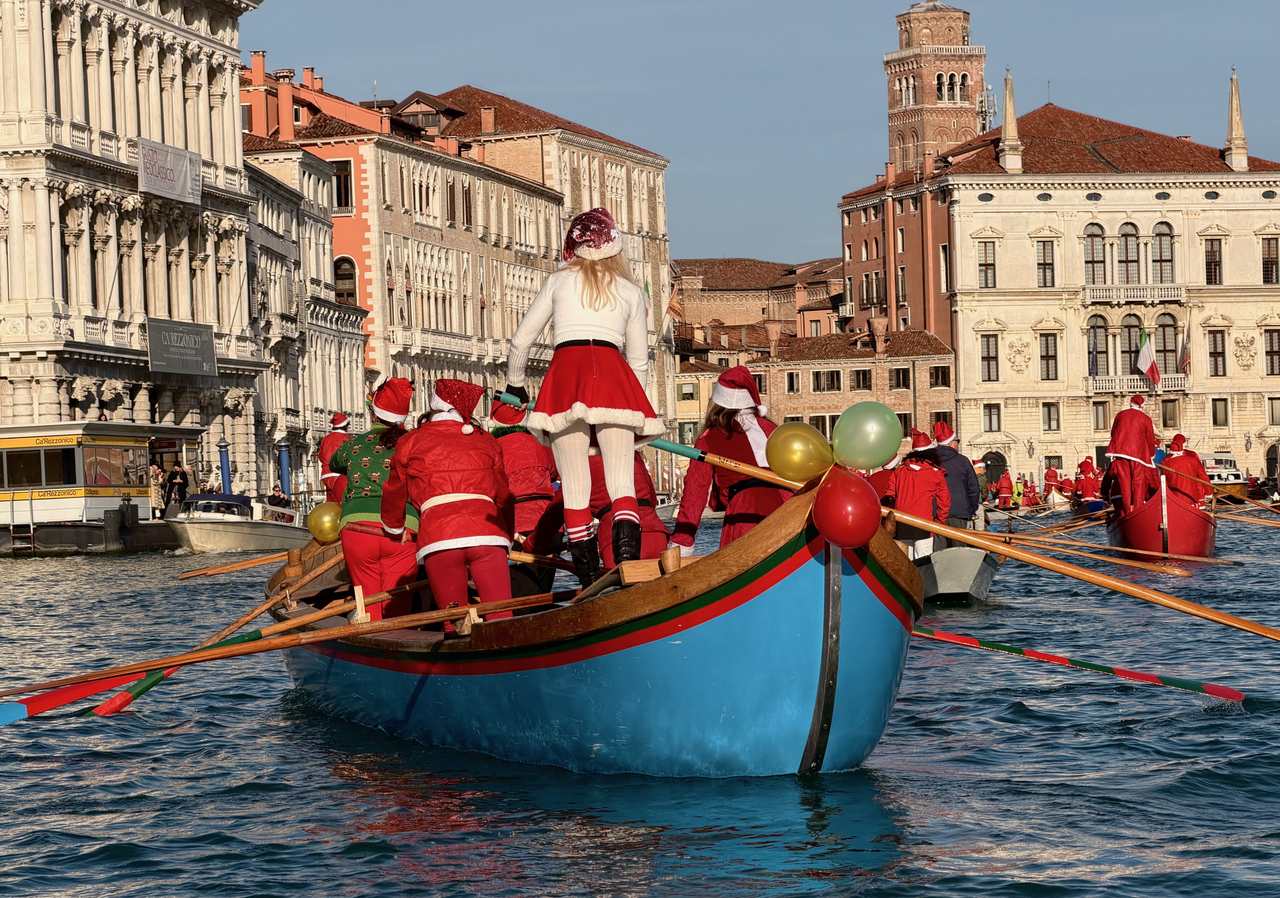
Babba Natale regatta
The vessels used in the festive Regatta dei Babbi Natale (Santa Claus Regatta) are not gondolas but wooden Caorlinas, sturdy work boats, now used by many Venetian rowing schools. Like gondolas the rowing is done standing up, facing forward, but typically by four, six or even eight rowers.
Although the population of the historic island city of Venice has seen a dramatic decline – from 175,000 in 1951 to below 50,000 in 2025 – there is no sign of tourism going the same way. Around six million tourists visit annually, many of whom will not leave the Floating City without the quintessentially Venetian experience of a gondola ride. This of course means good business for gondoliers and the hope is that enough of them will still bring their gondolas to traditional boatyards to keep the last of the squeri afloat.
Fact File
Arrange a customised visit to the Gondola workshop here
Where to stay in the Dorsoduro
La Calcina, Zattere ai Gesuati (www.lacalcina.com) is a charming, cosy hotel with friendly staff and wonderful views across the Giudecca Canal.
Where to eat and drink
Cantine del Vino già Schiavi, www.cantinaschiavi.com
A stone’s throw from the Squero, an historic wine bar and favourite of locals and visitors who prop up the bar for delicious cicchetti (tapas) or linger over canalside cocktails.
Osteria al Squero, Fondamenta Nani
Fine views of the squero opposite can be enjoyed over a glass of Spritz and excellent cicchetti.
Osteria Enoteca ai Artisti, www.enotecaartisti.com
Tiny osteria with creative gourmet food and excellent wine cellar. Reservations essential.