
Italy’s Cinque Terre coastal villages are legendary, made for dreamy hikes and boat trips. But they are also a tribute to the valiant wine-growers who have shaped this vertical terrain. From Portovenere onwards, we feast on Ligurian food and wine while meeting the locals determined to protect their culture for future generations.
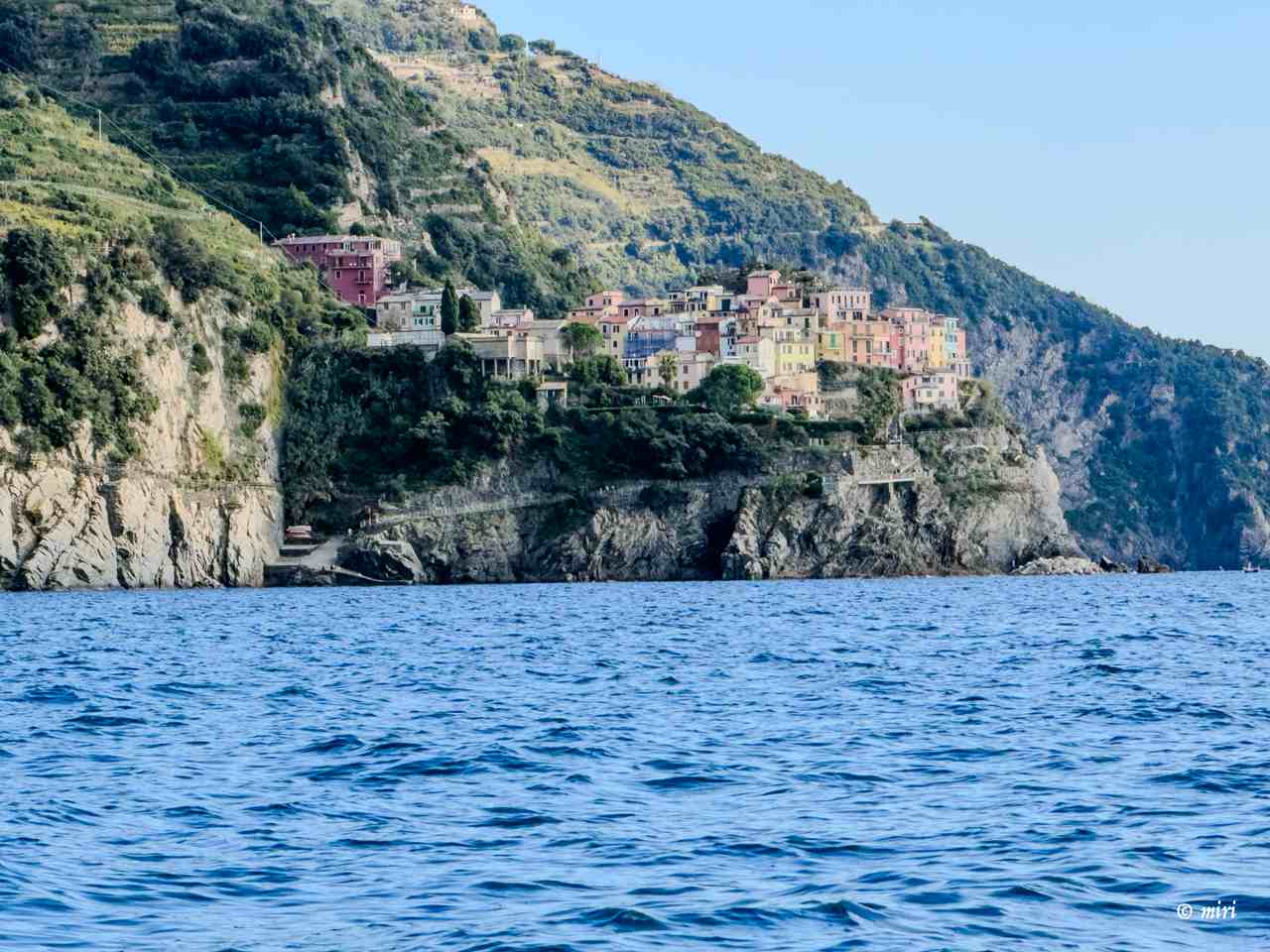
“You haven’t seen the Cinque Terre until you’ve seen the villages from the sea,” declares Federico Faranna of Viaggi di Mare. Proving his point, the captain waves towards the villages clinging to steep slopes, vineyards tumbling down to the sea, churches carved into the rocks.
“We need to see these villages the way the fishermen who built these outposts always saw them: from afar, from the sea.” I focus on the chain of five villages framed against the cliff face, impressed by the fierceness of the setting more than by the colourful cuteness of the houses.
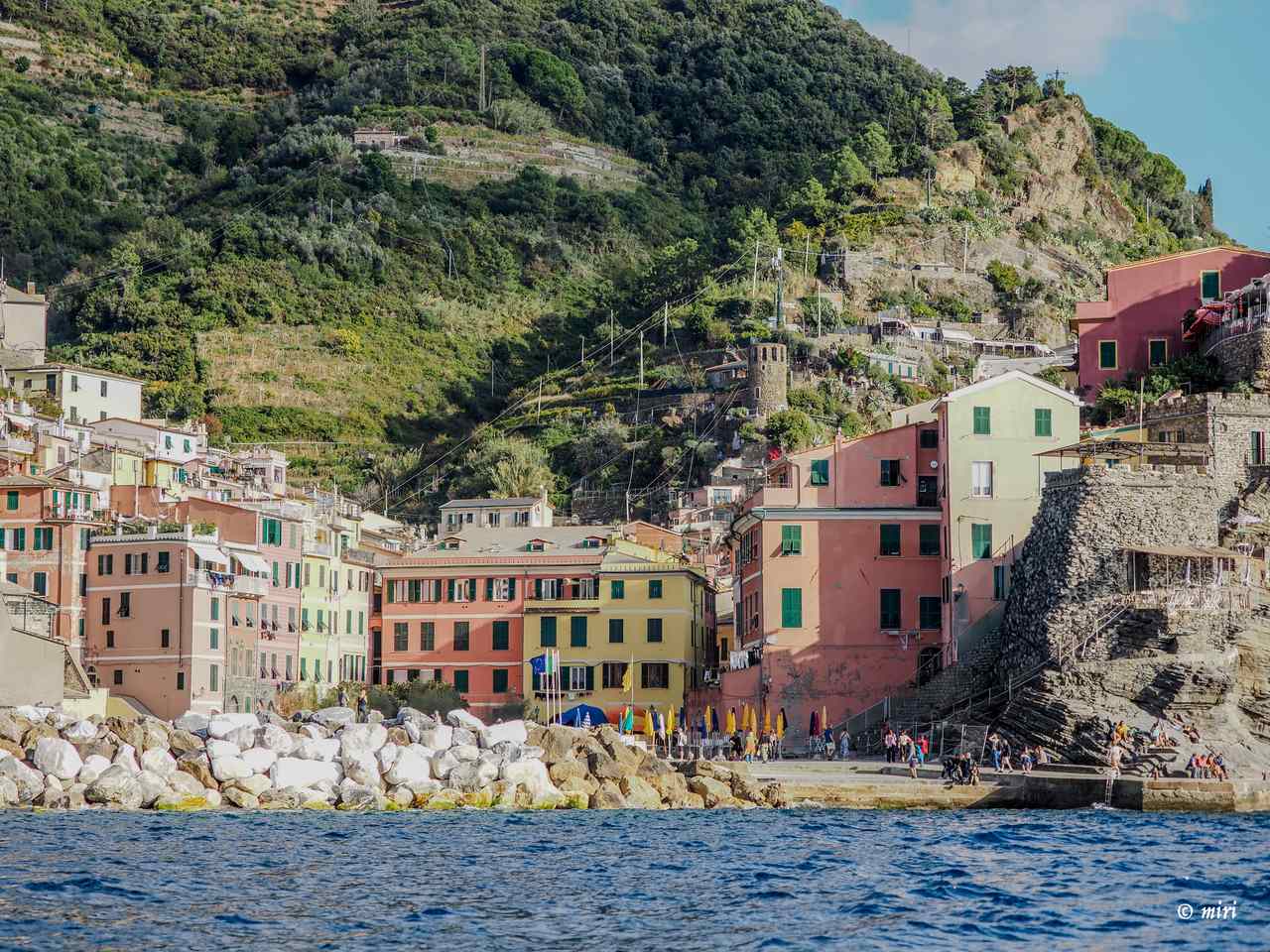
Vernazza c Cinque Terre Riviera
The Cinque Terre embrace five picture-postcard villages – Monterosso, Vernazza, Corniglia, Manarola and Riomaggiore – strung out along a rugged coastline. Each place promises labyrinthine lanes and a jumble of tall, narrow houses painted terracotta, tangerine – or pretty much any other colour you can conjure up.
It’s a Unesco-listed “living landscape” protected by its national park status. But behind these pretty facades is a story of survival, one forged through fishing and wine-making against the odds, and now fighting for sustainability over mass tourism.
Gateway to the Cinque Terre
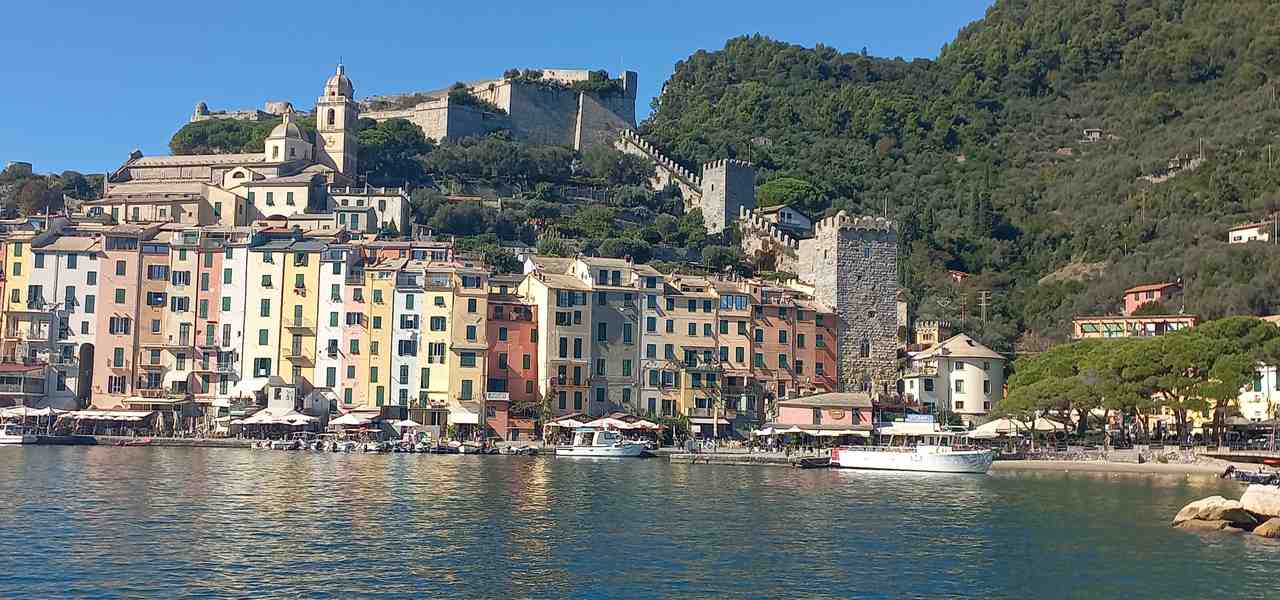
Portovenere viewed from Grand Hotel Portovenere, and a room with a view c Lisa Gerard-Sharp
Portovenere makes for a memorable port of call, a place that may be hard to reach but is equally hard to leave. The sea bastion’s labyrinthine lanes are framed by a jumble of tall, narrow houses painted in ice-cream shades of tangerine, peach, lemon and watermelon. Often dubbed “the sixth” Cinque Terre, Portovenere is more of a gateway to “the five lands” but also to hidden Tuscany, especially the rugged hinterland.
As a maritime stronghold of the Republic of Genoa, Portovenere is grander and nobler than the Cinque Terre villages. It is also more peaceful given that access is by boat or bus, not by train. Its strategic location also lends itself to exploring northern Tuscany, from the wild Lunigiana region, a borderland of castles and marble quarries, to the Tuscan coast beyond Marina di Carrara.
My base is Grand Hotel Portovenere, a boutique hotel set in a former Franciscan monastery. The sober décor is offset by the sunny staff and ravishing views over the fortified old town. The lofty retreat lords it over the panoramic promontory, facing the sea and Palmaria Island.
Dinner on the terrace is delightful, with the sea views competing with both the grilled octopus and the truffle and smoked pumpkin risotto. The blend of an unshowy base in a show-stopping location also draws discreet stars, from veteran singer Patti Smith to Stephen Spielberg, a long-term fan.
Pottering around Portovenere
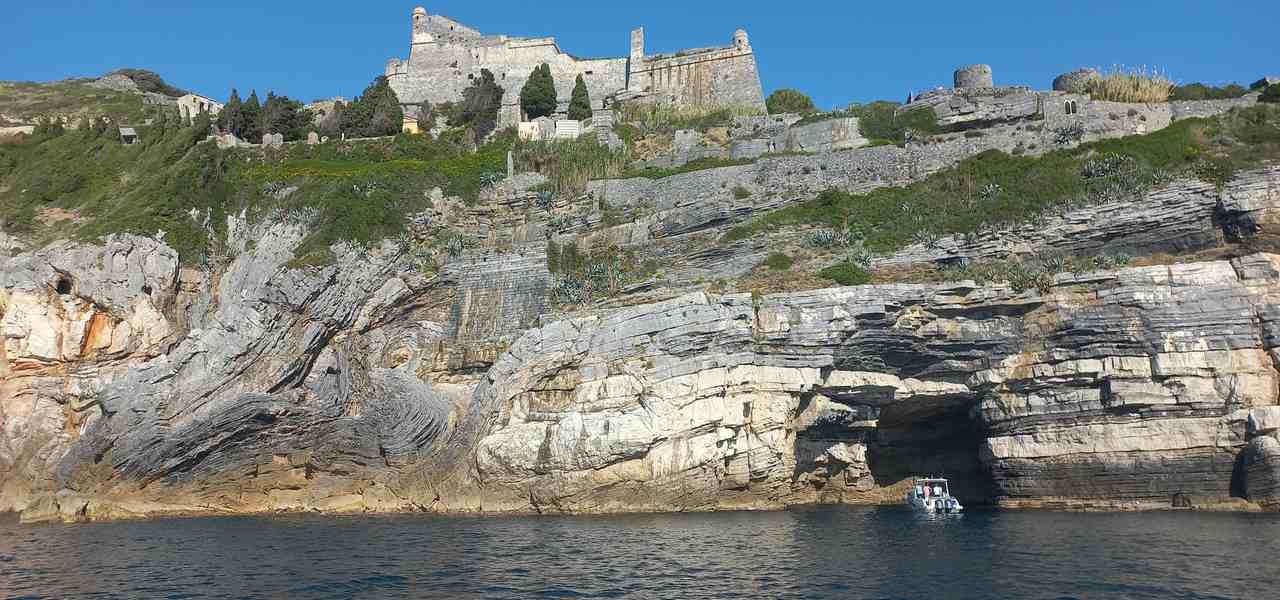
Recalling Byron’s swim across the bay from a marine grotto c Lisa Gerard-Sharp
Pottering around Portovenere means being waylaid by locals selling lemon liqueurs, sweet-scented pesto, twisted trofie pasta and aromatic white wines. I succumb to citrussy Gocce di Byron perfume inspired by Byron and the Romantic poets, who lived locally, including in Lerici.
The Romantics celebrated the town’s seafaring soul, but you don’t need to be a poet to be drawn to this windswept promontory and the crashing waves below. Perched on the point is a black-and-white striped Gothic church built over a Roman temple to Venus.
Beyond is a bay dubbed the ‘Gulf of Poets,’ awash in literary legends inspired by these shores. The marine grotto below the church marks the starting point for Lord Byron’s daring swim across the bay, a five-mile feat he took in his stride. In 1822, Byron was swimming to Lerici to visit his friends, the Shelleys, but later that year, in the same bay, Shelley lost his life in a summer storm. In true Romantic fashion, Shelley’s body was identified by the volume of Keats’ poetry in his pocket.
Liguria on a plate
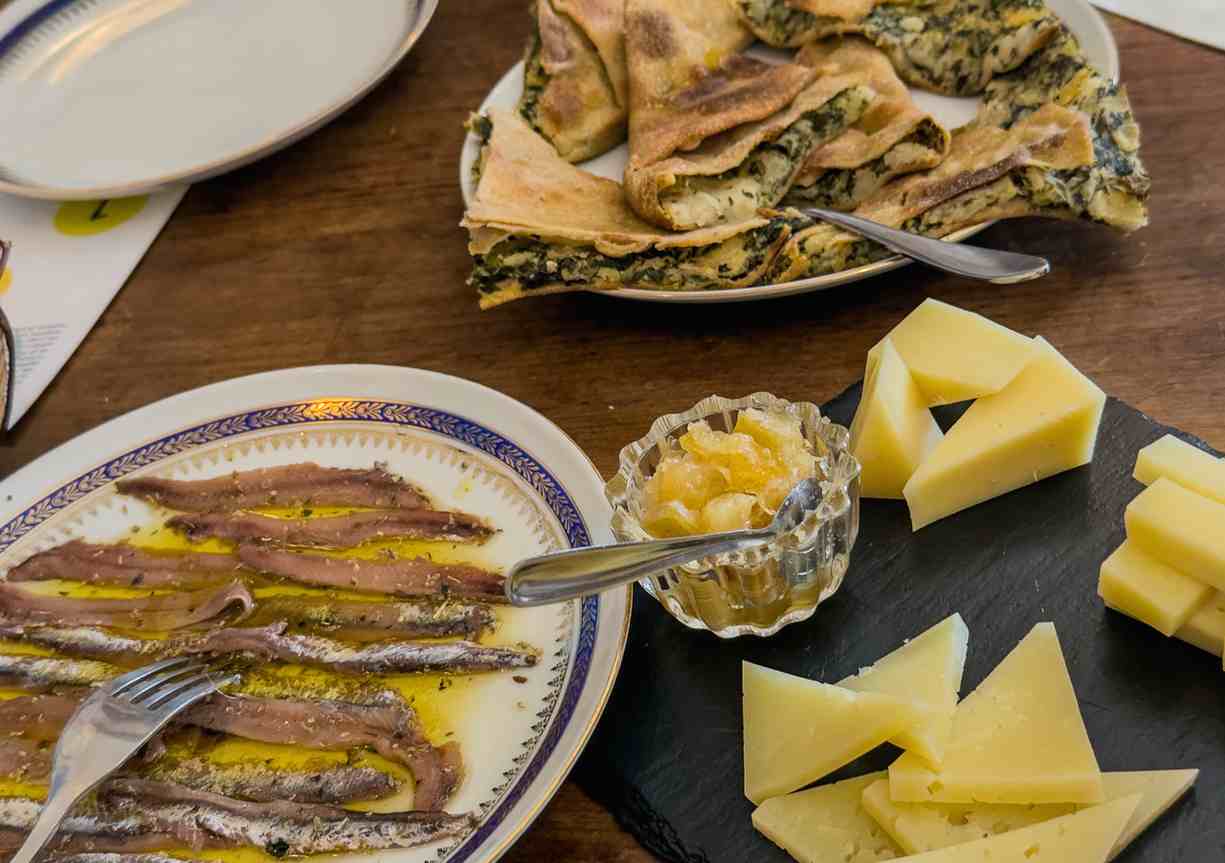
Ligurian tapas, from anchovies to torta verde (vegetable tart) c Cinque Terre Riviera
Beyond the over-hyped tourist centres such as Portofino, further north, are places where the locals revel in stories about their grandmothers who taught them how to cook pasta every which way.
One such, Chef Matteo at Grand Hotel Portovenere, shows me how to make pesto gnocchi, which I proudly eat for lunch. The chef reminds me that Liguria invented pesto, and that you need to savour it the way it’s meant to be: hand-made, with perfumed basil plucked from terraced hillsides, pine nuts, Parmesan cheese and aromatic Ligurian olive oil.
“Ligurian cuisine is simple but good peasant food based on seafood, vegetables, oil and pesto,“ enthuses Matteo, who champions recipes passed down by his granny. We finish the cookery class with a lemon-infused tiramisu “because who doesn’t like tiramisu.”
Sommelier Sabrina, who lives and breathes wine, then takes me through a sunset wine-tasting with a view. Inspired by her grandfather, who had a vineyard, Sabrina presents the Cinque Terre white wines, which range from crisp and citrusy to the sweet dessert wine of Sciacchetrà. Wine-making was supposedly introduced to the area by monks on Palmaria island, visible from the hotel terrace.
Island manoeuvres
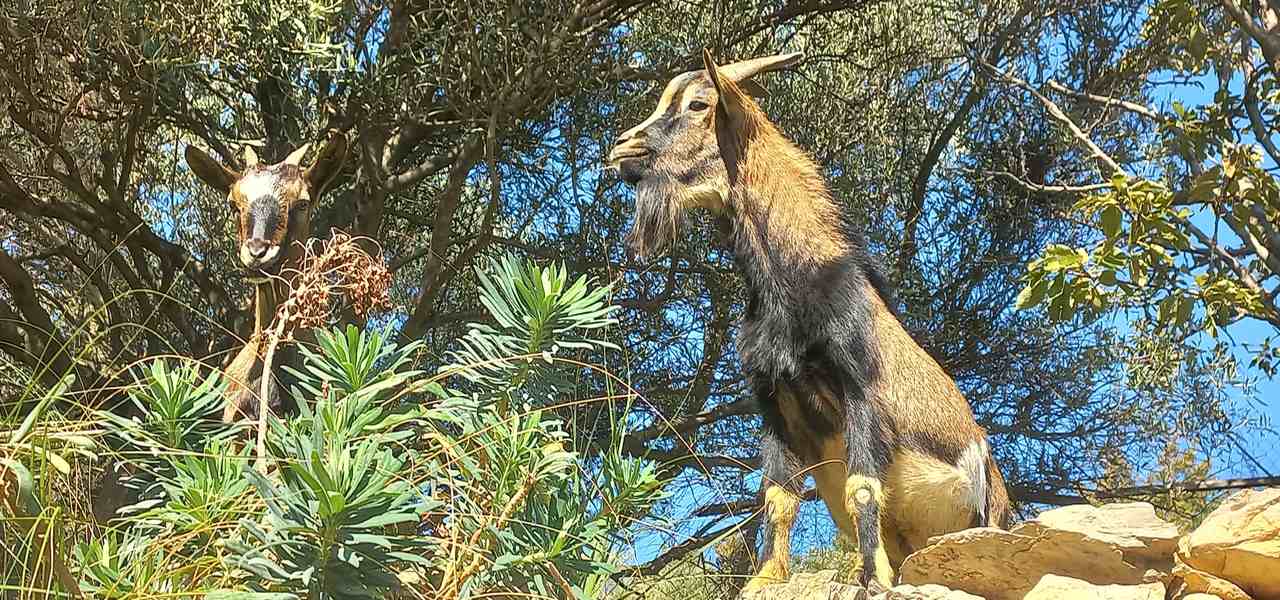
Goats on Palmaria Island c Lisa Gerard-Sharp
Palmaria, separated from Portovenere by a narrow inlet, is the place to walk off a Ligurian lunch. After a five-minute ferry crossing, I am led through fragrant scrubland to the summit and views of Portovenere perched on its promontory. Gaby, my guide, points out the neglected towers, bunkers and gun batteries: the militarised island was intended to guard the Gulf of La Spezia.
On our wayward hike, I am pleasantly distracted by the cliffs and coves, geckos and goats. The comical-looking wild goats peer at us from high ridges. But then the shooting and explosions begin, with a boat blown up before our eyes and big areas of the bay covered in smoke and fumes.
Apparently, the Italian navy, based in La Spezia, is on manoeuvres, performing military exercises in the bay. The deafening booms startle the bleating goats, who are running around in circles or hopping off crags. Our human bleating involves cowering and doom-scrolling in case the war games are for real. After we beat a hasty retreat, the ferryman confirms that these war games are more gung-ho than usual. What’s more, La Spezia, a Nato sentinel for monitoring Russian submarines in the Mediterranean, is often bristling with minehunters and frigates.
Cinque Terre in a glass
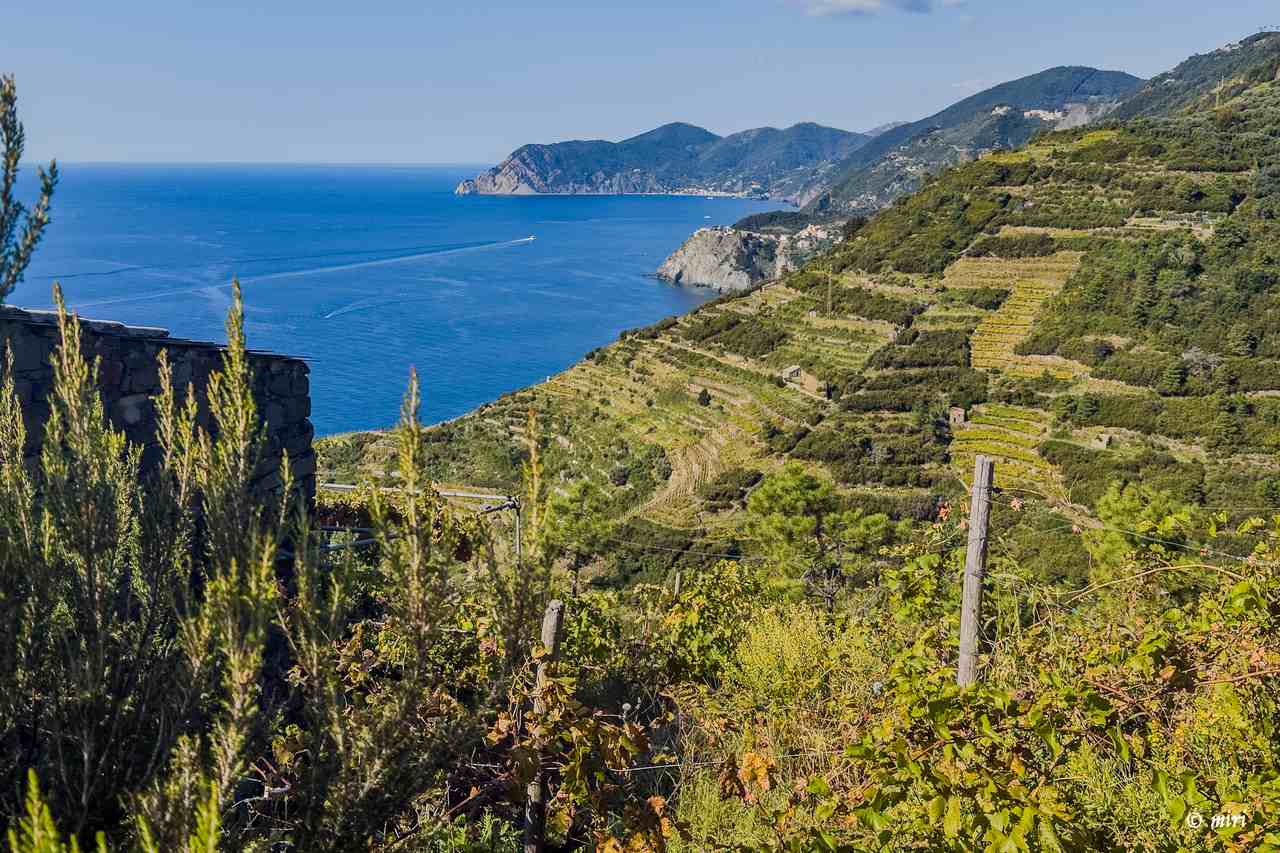
Steep terraces c Cinque Terre Riviera
Back in the Cinque Terre I’m badly in need of a drink so meet Sommelier Yvonne Riccobaldi in Manarola for a wine-tasting. Born and bred in the village, Yvonne also offers wine trails and pesto or pasta-making classes.
As we tuck into crunchy focaccia flatbread, anchovies and delicious torta verde, Ligurian vegetable tart, I am tempted by the pesto-making class. Naturally, it stars local trofie pasta, using her granny’s recipe and a mortar made of Carrara marble, quarried nearby.
We taste various aromatic white wines, made from blends of native varietals produced on steep, terraced vineyards along the Ligurian coast. As Yvonne says, “Cinque Terre white wine is synonymous with the sea, sun, salt, wind and rocks, with Mediterranean scrub and aromatic herbs.”
“Roots matter” is a mantra for this Sommelier, whether for wine or the growers themselves. Yvonne sees the locals as reserved, self-reliant and tough as the terrain: “This is heroic wine-making created by courage and resistance born from battling with the steepest slopes.”
With my guide Miriana from Cinque Terre Riviera, we take a boat from Manarola to Vernazza to see how these cliffside wine-making villages can forge a livelihood from such unpromising land. The romance of pastel-tinted villages tends to blind visitors to the precariousness of life here.
In Miriana’s eyes, it’s a UNESCO-listed “living landscape” partly tamed by generations of tenacious wine-growers. “This is an unforgiving land lined with vertical vineyards that need to be shored up with dry-stone walls. Sandwiched between sky and sea, these are low-slung vines designed to withstand buffeting by marine winds.”
Heroic wine-making
I want to see these valiant wine-growers for myself, but in this vertical domain, the only way is up. Led astray by the locals, I perform illegal manoeuvres in the vineyards, clambering onto a makeshift monorail to ascend the steepest slopes. This “motorised mule” is the only way for wine-growers to reach the lofty terraces and transport tools, harvests or heavy stones up and down the slopes.
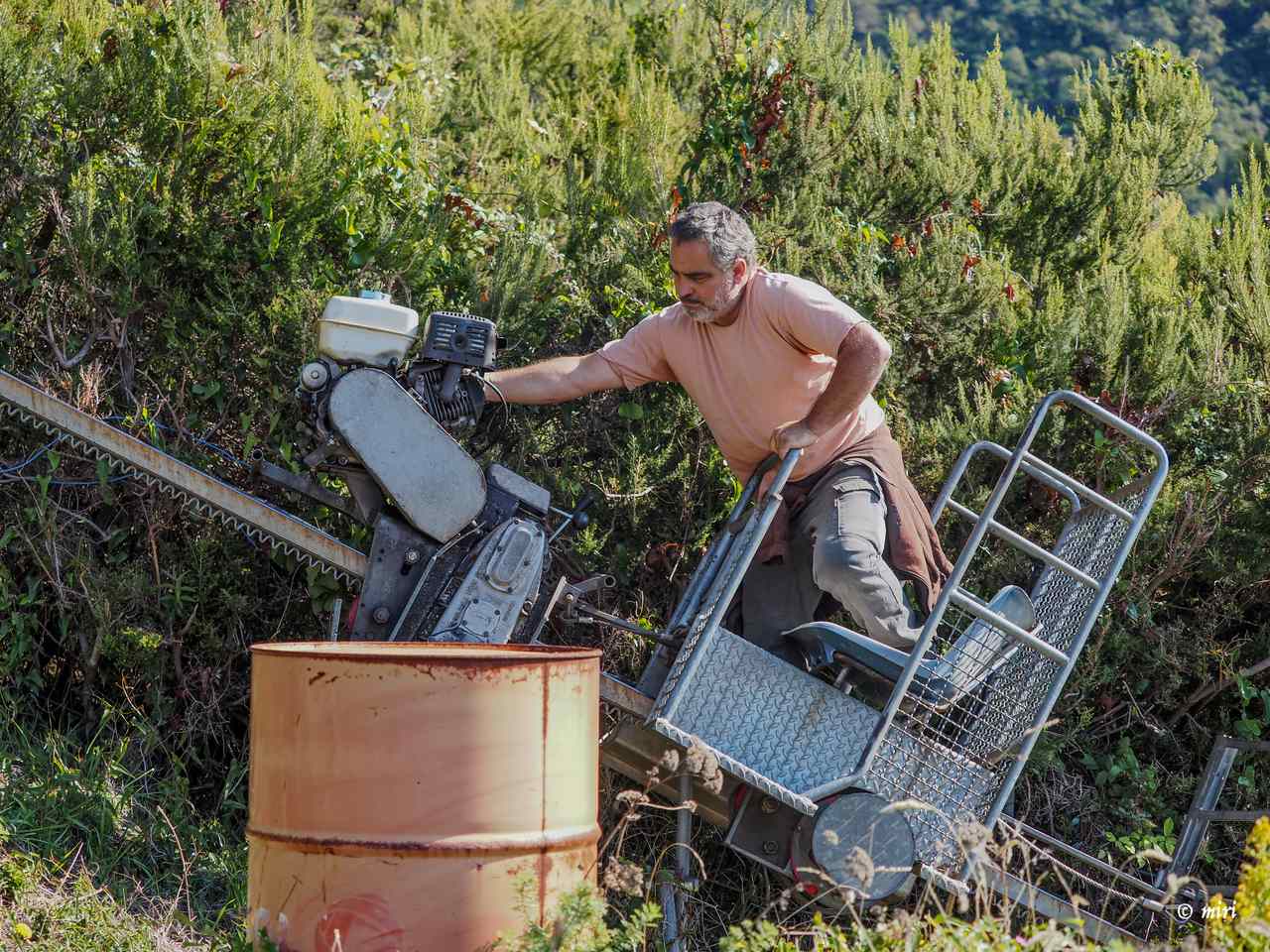
Monorail, a motorised mule c Cinque Terre Riviera
In the crags above Riomaggiore, wine-grower Davide (pictured) takes the only chair, with me clinging to an open cage behind him as we trundle to the top, negotiating steep drops and rocky terrain tumbling down to the sea. “I have no insurance for passengers,” warns Davide as he sees me struggling. For the first time I understand why this is dubbed “heroic wine-making.”
Davide accepts the backbreaking work as a fair price to pay for freedom, solitude and pride in his micro-winery, even if he envies fishermen for their easier life. Self-reliance comes with the challenging territory: “We’re Ligurian, we’re used to doing everything alone, without help.” And on a sunny day, “this is still paradise, alone with my vines, watching the bay below and munching a mortadella sandwich – who would want to be a fisherman?”
Exploring the Cinque Terre
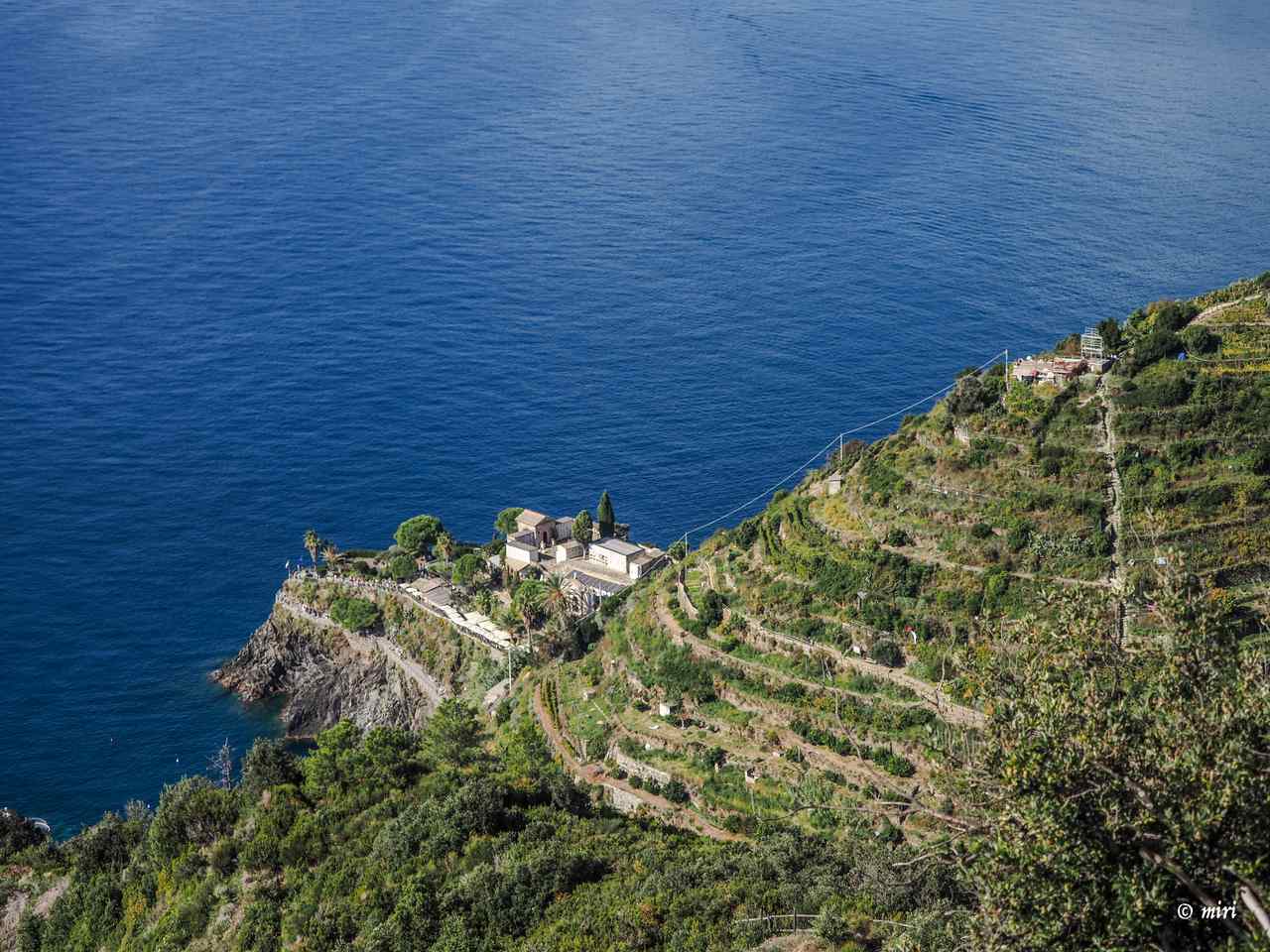
Cinque Terre terraces c Cinque Terre Riviera
The steep terrain means there are few parking options so come by train from Genoa, Levanto or La Spezia and explore the Cinque Terre easily by a mixture of train, ferry, bus and boat.
Getting around: take the Cinque Terre Express train, which connects all five villages with La Spezia, and which takes around five minutes between one village and the next. Monterosso is the only Cinque Terre village served by long-distance Intercity trains. Portovenere, the gateway to the area, is reached by bus or ferry from La Spezia. With a one-day ferry ticket you can hop on and off at villages between Lerici and Levanto: https://www.cinqueterre.eu.com/en/boat-excursions
“Train & trekking card” includes unlimited train travel on the La Spezia-Cinque Terre line, plus access to the park and key trails, including the ever-popular Via dell’Amore stroll: https://www.cinqueterre.eu.com/en/cinque-terre-card
Hiking: these are Italy’s most famous coastal paths so aim to do at least one hike, along with the newly restored Via dell’Amore stroll, the romantics’ favourite, even if it began as a footpath for railway workers between Riomaggiore and Manarola. Always consult the Cinque Terre website (above) to check the state of the paths and hikes, and the fees that support their survival.
Sailing and boat trips with Viaggi di Mare: private excursions can visit Versilia (the Tuscan coast), plus the Gulf of Poets and the Cinque Terre villages: https://viaggidimare.it and Ferries: https://www.navigazionegolfodeipoeti.it
More Info: about Cinque Terre and Cinque Terre Park
Staying in and around the Cinque Terre
While many of the grander hotels are seasonal, open from April to early November, villas and apartments can be great value out of peak season. May/June and September/October are lovely months for mellow weather and for avoiding the hordes on the main hiking trails. Portovenere and Lerici make delightful bases as the lack of train stations makes them quieter.
Grand Hotel Portovenere, Portovenere: a low-key luxury harbourside retreat overlooking the gorgeous gateway to the Cinque Terre and Tuscany,
Villas & Retreats are hand-picked Cinque Terre and Tuscany villas and sea-view apartments, ranging from historic cliffside homes on the coast to inland farmhouse rentals in authentic Lunigiana back-country, or swish contemporary villas in chic Forte dei Marmi
Cinque Terre Riviera for villas and apartments: this superb local tour operator offers far better rates than via classic online booking services
Hotel Golfo dei Poeti Relais, Montemarcello: a romantic, remote-feeling cliffside boutique bolthole overlooking the bay just south of Lerici, the Gulf of Poets.
Hotel Porto Roca, Monterosso al Mare: a clifftop retreat with a view over a rocky bay but convenient for the both the village and sandy beaches:
La Casa del Gigante, Monterosso al Mare: a small but luxurious beachside villa beside “the Giant” statue, the symbol of the village: https://www.cinqueterreriviera.com
Cadamare, Cadimare: charming, great-value rooms in the fishing village of Cadimare close to Portovenere, along the Gulf of La Spezia
Tasting the Cinque Terre
Grand Hotel Portovenere: sample a pasta-making class with Chef Matteo or wine-tasting with Sommelier Sabrina before a Ligurian feast on the terrace.
Wine-tasting in Manarola: Sommelier Yvonne offers cookery experiences and wine tours as well as guided tastings in her home village.
Cinque Terre Riviera: this Vernazza-based tour operator offers unusual food and wine experiences, including pesto and pasta-making.