
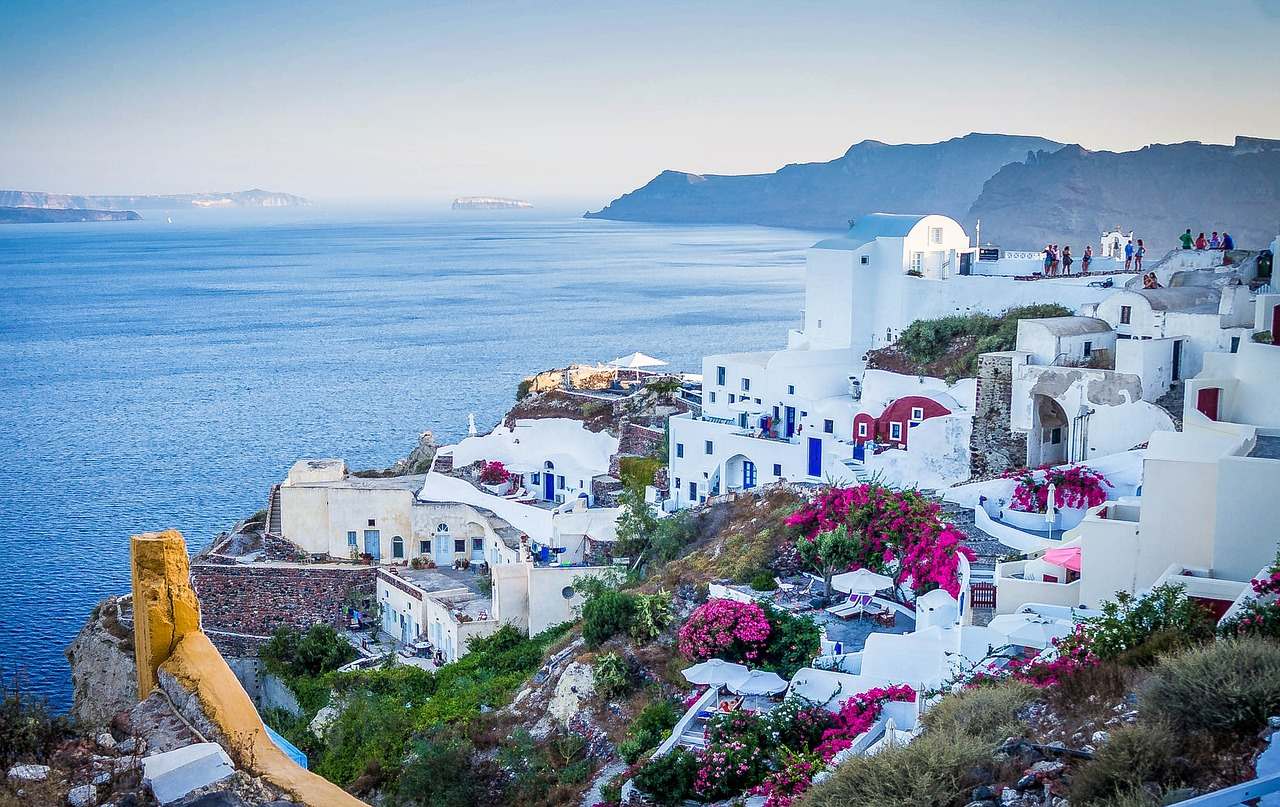
If you had a bird’s eye view of the Greek-owned Cyclades, they would look like an intriguing mosaic of 20 tufts of verdant earth floating on the turquoise waters of the Aegean sea. It’s an incredible formation created by the geological changes that took place millions of years ago.
According to Greek mythology, Poseidon, God of the sea, was so furious at the behaviour of the Cyclades’ nymphs that he turned them into islands.
However they were formed, The Cyclades — which means the Sacred islands around Delos — their beauty and dazzling light can lend themselves to a spot of spirituality.
They are at their best in May and still gorgeous throughout the summer months.
For most of the year, the wild rugged volcanic scenery remains whitewashed with sugar cubed Cycladic architecture that looks superb against the dark or vegetal backdrop with the deep blue sea lapping at their shores. Here are six suggestions.
Santorini
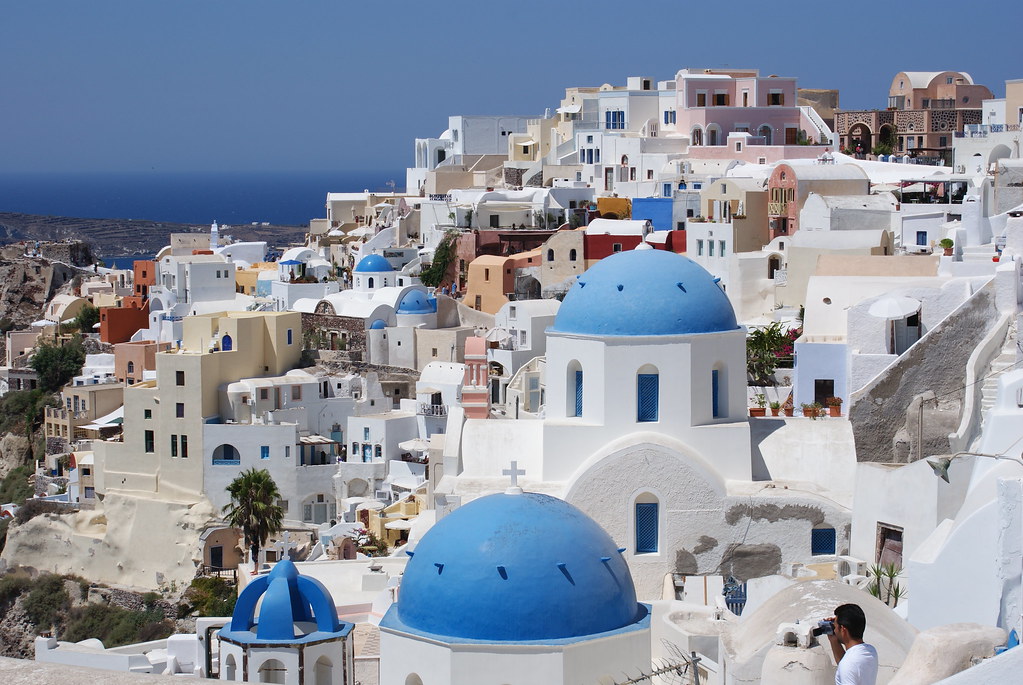
Santorini (c) flickr/David Spender
Some say the most beguiling and popular island of this Aegean archipelago is Santorini. Everyone will have seen that iconic image — you know, the one with the cliff-top blue-domed church standing out amid shimmering white architecture that dazzle against the blue skies and seas.
Cruise ships stop there, weddings take place there just for the scenic photography and holidaymakers clamber over the ramparts of the 13th-century castle in an almost cult-like fashion, to be sure of the best view of the sunset.
There are beaches, a pebbly one at Kamari and a black sand one at Perissa and Karterados and these are overlooked by jagged cliffs and a brilliant light that seems peculiar to the Cyclades — it can be mesmerising.
The hillside towns of Fira and Oia are quaint with sometimes steep steps and knotted alleyways and make for an idyllic afternoon exploration. And in the evenings the roof terraces of restaurants are light and alive with diners enjoying libations and alfresco dining in the warm night air.
This island is all about relaxing sophistication. Just ask Angelina Jolie. She holed up here for a month after filming her second Tomb Raider film.
Mykonos
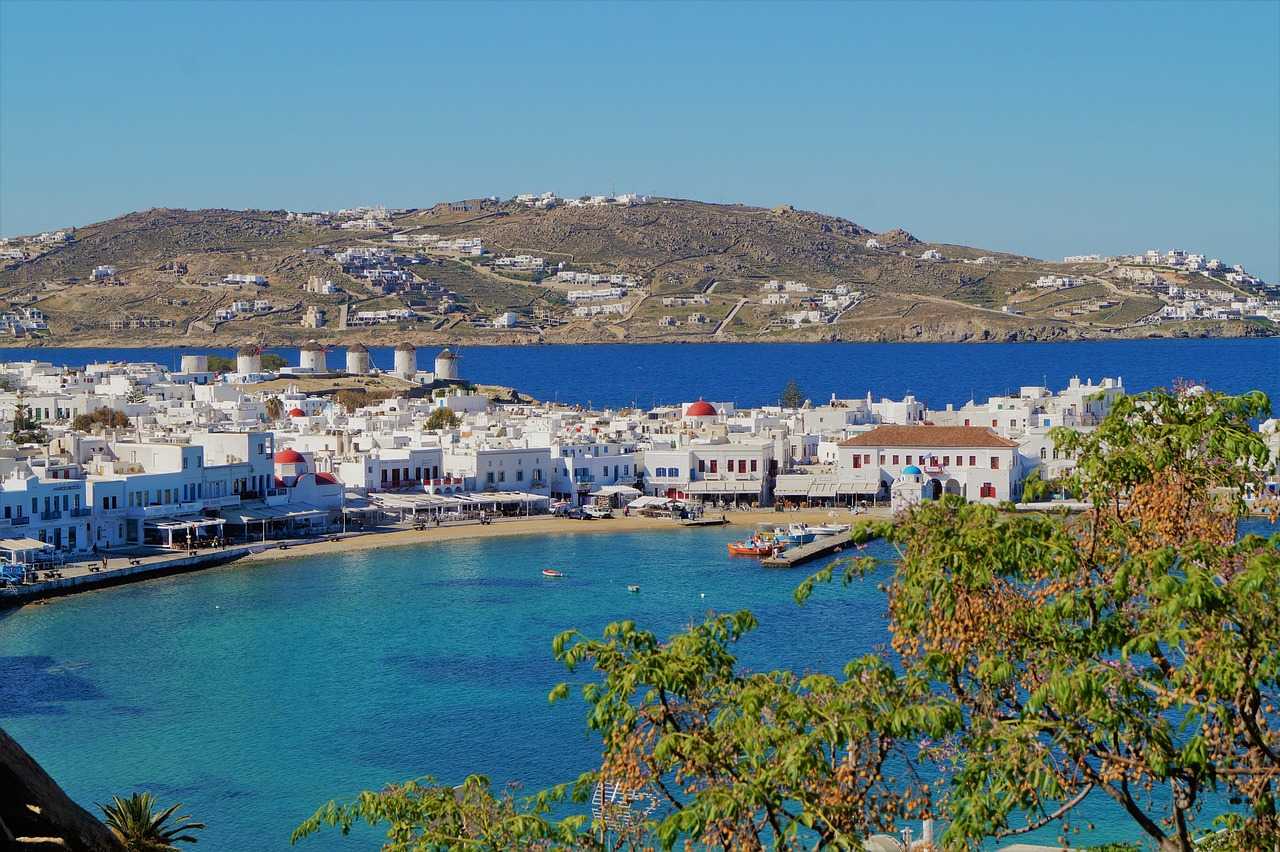
Mykonos
Bare hills, sandy beaches and a glitzy vibe make up this 86 square kilometre island. There are barely 10,000 locals, yet the island is set upon by tens of thousands of tourists looking to party. Nightclubs are two a penny, several pubs and shops stay open throughout the night.
This is a fun island and, naturally, its most famous beach, Paradise Beach, has its share of nightclubs, a campsite, and the odd restaurant. Nearby is Super Parade, a gay nudist beach that may not be to everyone’s taste. For a little peace and quiet, head to Agia Ana, though it may seem comparatively undeveloped.
Its main town, Hóra, is full of fashion shops, but as tempting as it is to go shopping, stay away between 10 am and 5 pm when the cruise ships stop by.
Naxos
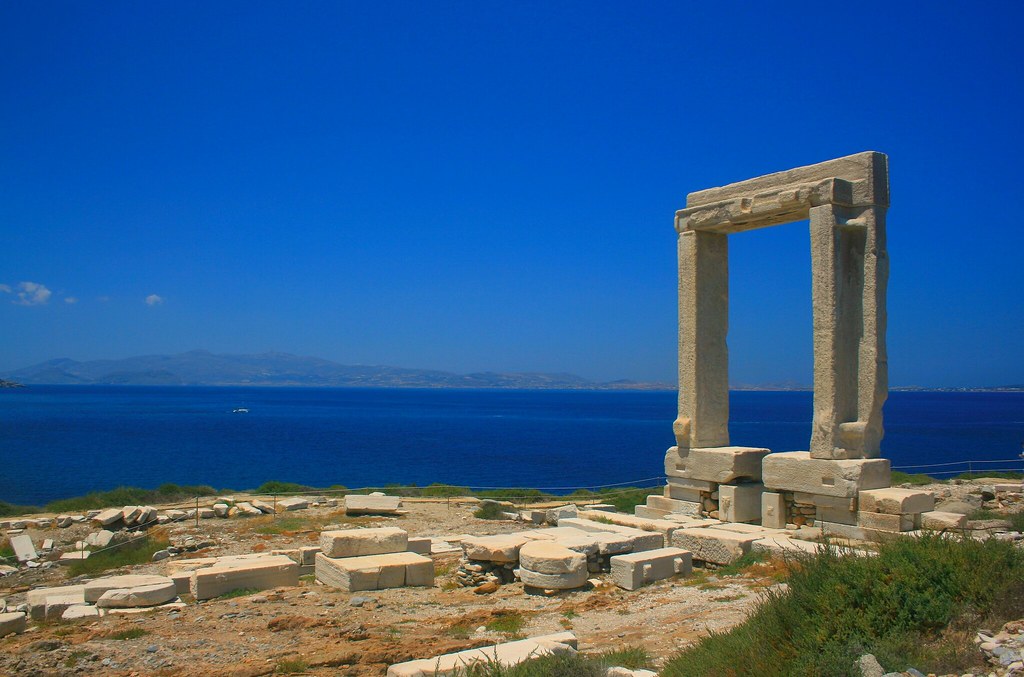
Portara (“Great Door”), Temple of Apollo, Naxos (c) flickr/Navin Rajagopalan
This is the largest of the Greek Islands in the Aegean Sea, and when you arrive by boat, you will be met with its most famous archaeological site — the Portara, the doorway to the ancient temple of Apollo built in 522 BC.
The island is home to the highest mountain in the Cyclades — Mount Zeus – the source of much mythology. They say that this was the nuptial isle of Dionysus, the God of wine. That’s why there is a sanctuary dedicated to him. Its coastline is a doily of sensational beaches, some secluded. Windsurfers love Mikri and Vila in the west.
Inland, the landscape rises into dramatic mountains where small villages seem to emerge naturally from fertile valleys dotted with fields and ancient olive groves. The island’s harbour lies in the capital, where narrow alleys climb steeply towards the imposing citadel — a landmark visible for miles across the surrounding countryside. Beyond the capital, the island reveals layers of history in its old churches and monasteries, alongside elegant Venetian castles and historic homes that hint at centuries of cultural influence.
Paros
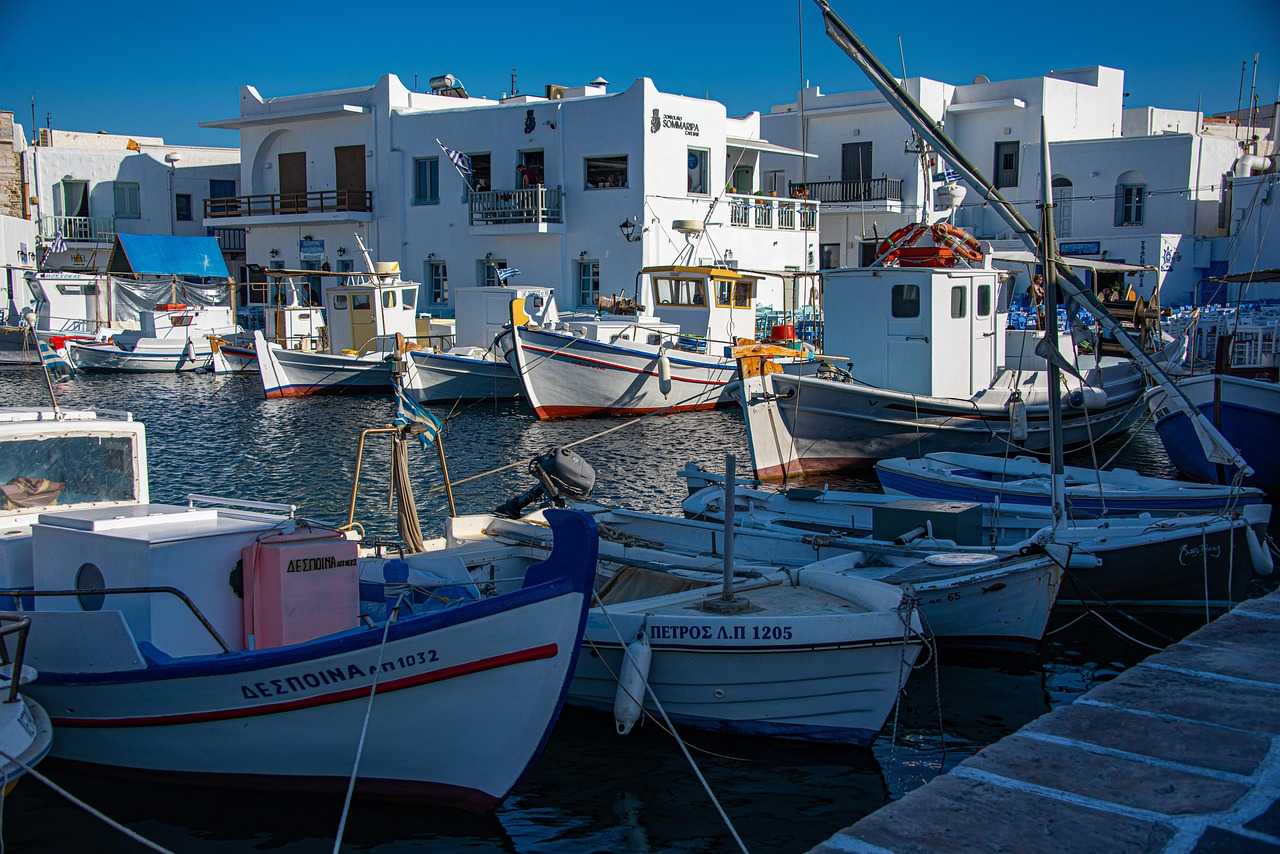
Paros
Paros, a lively ferry hub and charming Venetian port, may well be one of the most beautiful islands in the Cyclades. Known for its golden beaches and picturesque villages, the island blends relaxed island life with vibrant holiday energy.
The capital, Parikia, serves as the island’s main port and gateway, with whitewashed houses, winding streets and traditional tavernas. Meanwhile, Naoussa — once a quiet fishing village — has transformed into one of the island’s most stylish and cosmopolitan destinations, filled with chic restaurants, lively bars and boutique shops around its charming harbour.
For a touch of history and culture, visitors can explore the nearby Panagia Ekatontapiliani, often referred to as the “Church of a Hundred Doors,” a remarkable Byzantine monument and one of the most important early Christian sites in Greece.
Ios
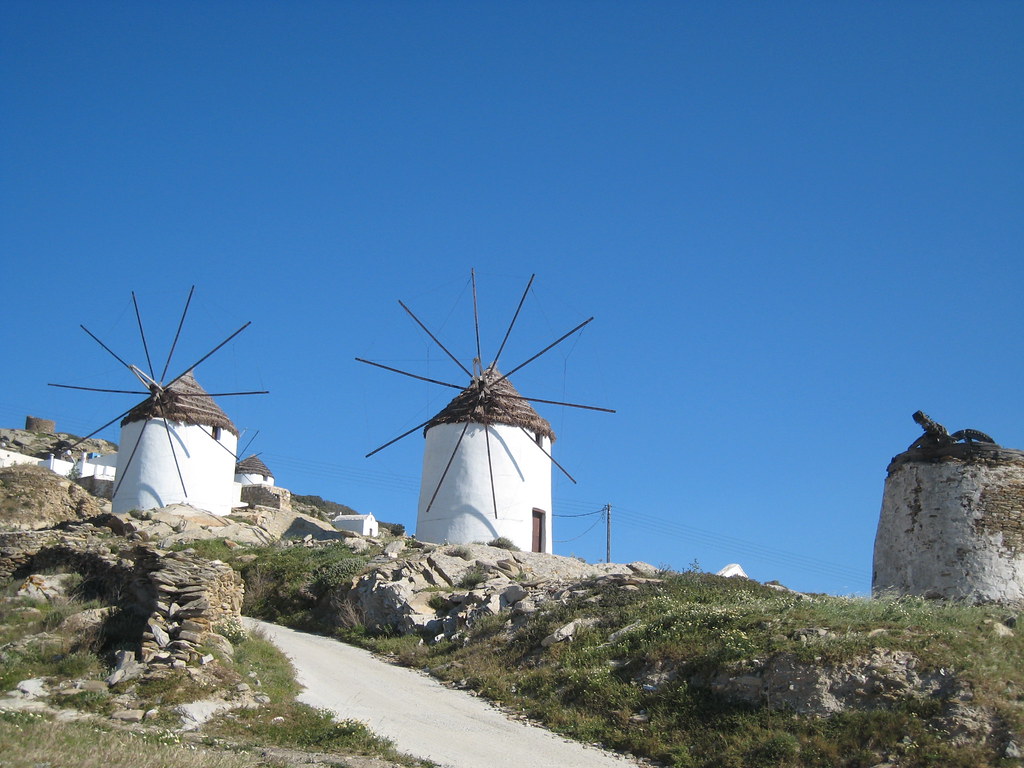
Ios windmills (c) flickr/Stefanos Kofopoulos
Ios may have 365 churches, but among younger travellers it is best known as one of the Cyclades’ most energetic party islands. Famous for its vibrant nightlife, the island comes alive after sunset, with beach parties often beginning in the early evening and continuing long into the night. Nowhere captures this atmosphere more than Mylopotas Beach, a kilometre-long stretch of golden sand lined with lively bars, restaurants and a wide range of water sports.
For those seeking a quieter side of the island, there are more peaceful corners to discover. Valmas Beach and Kolitsani Beach offer calmer waters and a more relaxed atmosphere, perfect for an afternoon swim away from the crowds.
Beyond the beaches and nightlife, Ios also reveals a more tranquil charm in Chora, the island’s hillside capital and arguably one of the most picturesque villages in the Cyclades. Its maze of whitewashed houses, narrow alleys and traditional windmills climb the hilltop, rewarding visitors with breathtaking views across the Aegean.
Adding a touch of mythology to the island’s story, local legend holds that the ancient poet Homer had family roots on Ios, and some even claim that his final resting place can be found on the island.
READ ALSO: Top 5 natural wonders of the Greek Islands
READ ALSO: City break to Thessaloniki, Greece
Delos
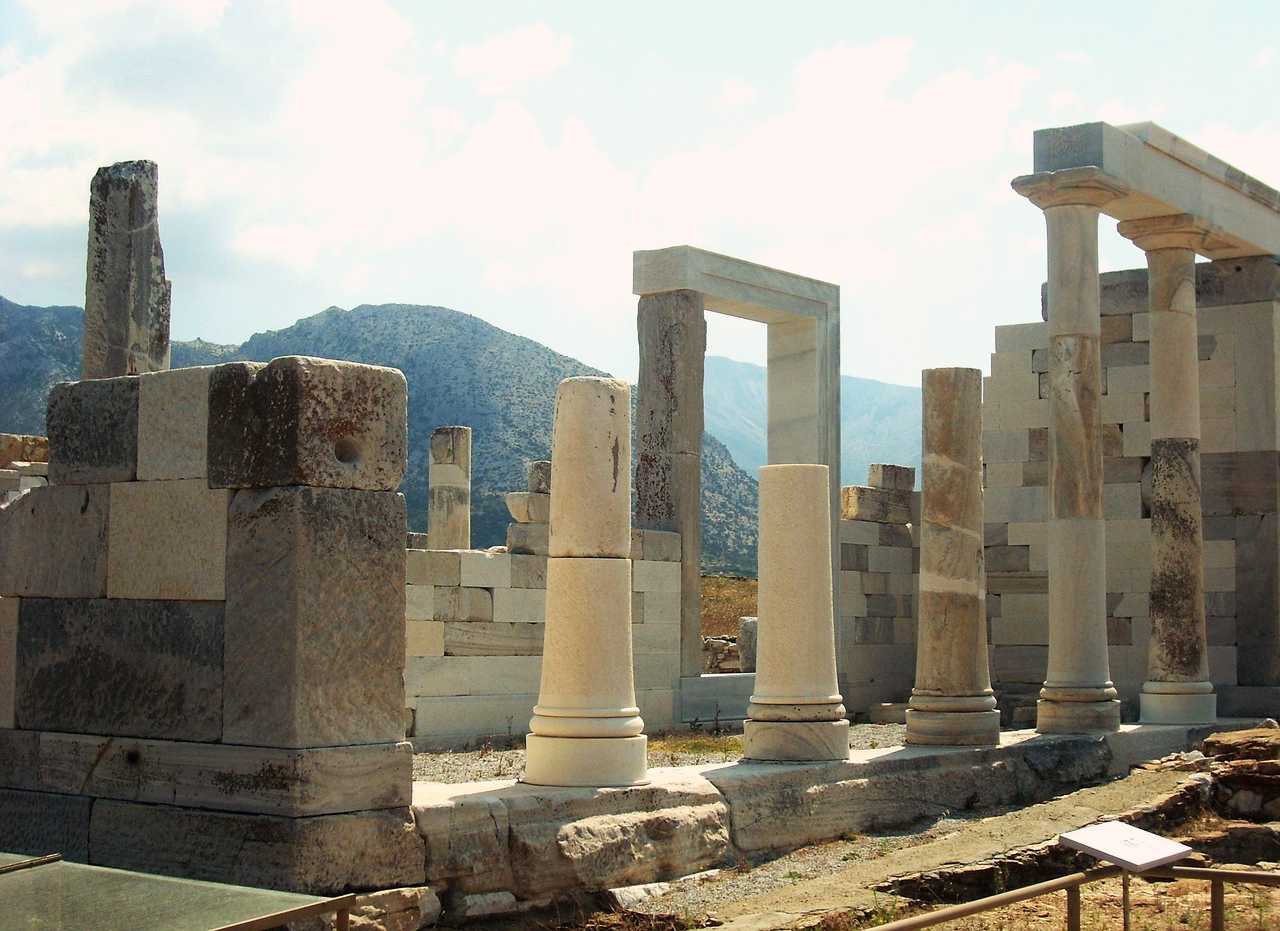
Delos
You can’t stay overnight on Delos, but it is a destination that should not be missed. Located at the heart of the Cyclades archipelago, this UNESCO World Heritage site is steeped in mythology and history. According to legend, it is the birthplace of Apollo and his twin sister Artemis, and in ancient times the island served as one of the most important religious centres in Greece.
Wander through an extraordinary open-air archaeological site, where centuries of history are laid out among remarkably preserved ruins. Highlights include the elegant Minoan Fountain and the imposing Temple of the Delians, along with beautifully detailed mosaics that still hint at the island’s former grandeur. The short ferry journey is a small price to pay for the chance to explore one of the most significant historical sites in the Aegean.
FIND YOUR FLIGHT: